
An aerial image is not an asset decision. Drone industrial inspection South Africa can help teams assess hard-to-reach assets and reduce reliance on disruptive access methods, but a flight alone does not create operational value. The evidence must answer a defined question, be reliable enough to review and connect to a decision.
Conventional inspections can involve access constraints, downtime and worker exposure. The practical question is whether aerial data can support action without adding unnecessary operational risk or disruption. It can when the inspection is planned around the asset, the decision required and the site conditions, rather than treated as photography alone.
This article explains where drone inspection fits within an industrial asset strategy and how to turn observations into prioritised maintenance or investment intelligence. It covers how to define the inspection objective and operating requirements, then set useful outputs, governance and next steps. Greenovations Venture Studio offers Drone-Powered Industrial Intelligence, connecting industrial inspection planning with asset performance and implementation decisions.
Key Takeaways
- Distinguish industrial inspection from aerial photography by starting with the asset question and the decision the evidence must support.
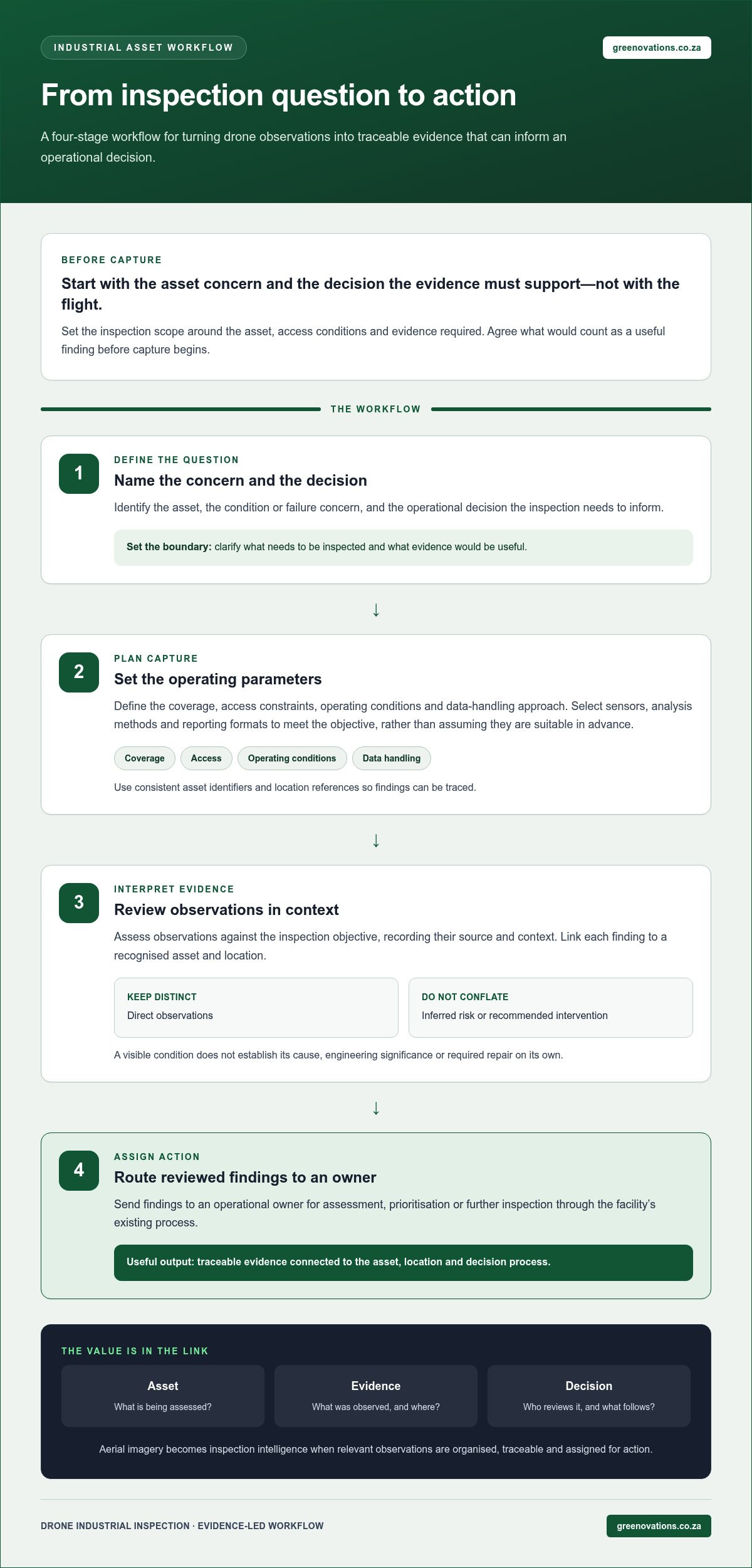
- Use a four-stage workflow to define the inspection question, plan data capture, interpret findings and assign action.
- Compare drone, manual and hybrid methods against task suitability, access, evidence needs, repeatability and operational disruption.
- For drone industrial inspection South Africa, account for mission-specific aviation requirements, site access, facility coordination and operating windows.
- Set the inspection scope around the evidence required and the intended decision, then agree governance and next steps.
Drone industrial inspection in South Africa: what it measures and why it matters
Industrial inspection is more than aerial photography or general surveillance. Drone industrial inspection is the planned capture and interpretation of aerial observations to assess an industrial asset and support a defined operational decision. Its value comes from making relevant asset evidence easier to review and act on, not from producing more images.
A drone, or Unmanned aerial vehicle (UAV), can provide an aerial perspective when the asset, access conditions and evidence requirements make that method suitable. In South Africa, potential applications include solar infrastructure, structures and other hard-to-access industrial assets. The inspection objective determines what to observe and whether aerial capture can provide useful evidence. A drone cannot establish every defect remotely, so some findings may need closer examination using another method.
Which industrial assets can a drone inspection assess?
Suitability depends on the asset and the decision at hand. A review of solar infrastructure, for example, may identify areas for closer assessment. A structural inspection may focus on visible surfaces or components. These are potential applications, not a guarantee that a drone can identify every fault. The scope should specify what evidence is needed, what can be observed safely and where another inspection method may be necessary.
Access is only one consideration. A drone may help observe an asset where conventional access is constrained, but the programme still needs a defined inspection boundary and a plan to validate issues that aerial evidence cannot resolve. Used this way, drone inspection can complement asset-management and maintenance processes without replacing every inspection method.
What is the difference between aerial imagery and inspection intelligence?
Raw imagery records a view. Inspection intelligence organises relevant observations so they can be traced to an asset or location, interpreted in context and assigned for action. Without asset identifiers, location references and a clear purpose, a large image set can increase review effort without improving maintenance decisions.
For example, aerial observations may show an area of concern on a structure. The image becomes more useful when it is linked to the correct asset and location, described against the inspection objective and sent to an operational owner for assessment. That owner can decide whether to monitor the condition, schedule a closer inspection or initiate maintenance through the facility’s existing process.
This is the commercial distinction at the centre of drone industrial inspection South Africa: structured evidence that can inform asset priorities, rather than imagery for its own sake. Greenovations Venture Studio offers Drone-Powered Industrial Intelligence to connect inspection scope with asset performance and the decisions that follow.
How drone inspection turns industrial asset data into actionable evidence
Actionable inspection evidence starts before a drone is deployed. Design the inspection around a specific asset concern and the decision that follows, so capture, interpretation and review stay connected. This turns drone industrial inspection South Africa from a data collection exercise into a structured input for asset management.
How should an industrial drone inspection be scoped?
Start by identifying the asset, the condition or failure concern, and the operational decision the inspection must inform. Then define the inspection boundary, access constraints, operating conditions, required coverage and data-handling approach. Agree what would count as a useful finding before capture begins. Select sensors, analysis methods and reporting formats to meet the objective rather than assuming they are suitable in advance.
A practical workflow has four stages:
- 1. Define the question: State the asset concern and the decision the evidence needs to support.
- 2. Plan capture: Set coverage, access and operating parameters, using consistent asset identifiers and location references.
- 3. Interpret evidence: Review observations against the inspection objective and record their source and context.
- 4. Assign action: Route reviewed findings to an operational owner for assessment, prioritisation or further inspection.
Identifiers make findings traceable. A note linked to a recognised asset and precise location is easier to compare with maintenance records and send to the responsible team than an unlabelled image. South Africa’s mining and infrastructure applications provide useful context; the International Trade Administration summarises drone use in mining and infrastructure. The same discipline applies across industrial sites: connect evidence to asset records and the relevant decision process.
How does inspection evidence support maintenance prioritisation?
A review queue can organise findings by location, observed condition and assessed severity, helping asset teams decide what needs attention first. Keep direct observations separate from inferred risk and recommended intervention. An image may document a visible condition, but it does not establish its cause, engineering significance or the required repair on its own. Review and validation help prevent captured data from being treated as a final conclusion.
Repeat inspections can support comparison when capture methods, asset references and review criteria are sufficiently consistent. Changes in observed condition can inform a maintenance review. Record differences in method or coverage so they are not mistaken for changes to the asset. Greenovations’ Drone-Powered Industrial Intelligence connects inspection scope to asset decisions and implementation requirements.
How to assess drone industrial inspection for your facility
Choose an inspection method by the task, not by the technology. Drone industrial inspection South Africa is most useful when the asset, access conditions and evidence requirements suit aerial observation. It is not a universal substitute for manual examination. Direct access or another method may still be needed to verify a condition or assess details that imagery cannot establish.
When is drone inspection a suitable industrial method?
Assess the asset’s geometry, the inspection objective and operating conditions together. A drone may suit a task when the relevant area is observable from the air and conventional access creates significant planning or operational friction. Manual inspection remains appropriate when close contact, physical testing or detailed verification is required. A hybrid approach can use aerial observations to guide follow-up examination, rather than treating the methods as interchangeable in every situation.
| Assessment criterion | Drone inspection | Manual inspection | Hybrid inspection |
|---|---|---|---|
| Objective | Useful when aerial observation can answer the inspection question. | Suitable when direct examination or hands-on assessment is needed. | Useful when aerial review can guide targeted close inspection. |
| Access | Assess whether the target is visible and reachable under the planned operating conditions. | Consider the access method and work required at the asset. | Use aerial capture to focus subsequent access on defined areas. |
| Evidence needs | Define which images or observations can substantiate the finding. | Use when evidence requires direct examination or testing. | Combine aerial records with follow-up findings when the task demands both. |
| Repeatability | Compare observations when capture methods and asset references are consistent. | Consistency depends on the inspection procedure and records. | Align aerial and manual records to the same asset identifiers. |
| Disruption and decisions | Assess whether the method can reduce access friction, then assign findings to an accountable reviewer. | Assess required access and operational coordination. | Balance targeted access with traceable evidence and clear decision ownership. |
What makes inspection findings commercially useful?
Useful evidence identifies the asset and location, records the observed condition and enters a review process with an operational owner. Check whether teams can retrieve the record, compare it across assets or inspection cycles, and distinguish observation from interpretation. A finding should not become a maintenance instruction until the responsible reviewer has considered its context and significance.
Evaluate value through operational fit, not an assumed savings figure. If aerial assessment reduces difficult access planning or helps maintenance teams focus on specific locations, assess that benefit against the facility’s own process and baseline. Better prioritisation can support maintenance planning, but it cannot guarantee higher yield or prevent failures. Choose the method based on the task, evidence required and operational constraints.
South African drone inspection planning: aviation, site and data controls
A viable inspection plan addresses operational risk before capture begins. For drone industrial inspection South Africa, aviation requirements and operating permissions depend on the mission and operating conditions. Verify current South African Civil Aviation Authority (SACAA) requirements for the specific scenario. A generic checklist cannot establish that a proposed flight is authorised.
What should a South African industrial site plan before a drone flight?
Site readiness means more than arranging access. Define where work may take place, who could be affected and how the inspection fits around facility operations. Align the flight plan with the site’s responsible teams, operating boundaries and work schedule, then document relevant hazards and controls before activity starts.
- Access and boundaries: Identify entry arrangements, the inspection area and any site restrictions.
- Facility coordination: Notify affected teams, confirm who controls the work area and align the activity with operational schedules.
- Safety and conditions: Record site-specific hazards, control measures and conditions that could require work to pause or change.
- Aviation requirements: Check current SACAA rules and mission-specific permissions against the proposed operation. Do not assume one approach applies to every site.
- Operational window: Select a period that accounts for facility activity, access constraints and the conditions needed to conduct the inspection.
These controls are project inputs, not administrative afterthoughts. Clear responsibilities and agreed boundaries help prevent avoidable conflict between inspection activity and site operations.
How should industrial inspection data be governed?
Define a route for captured material from collection to review, decision and retention. Agree who owns or controls the records, who may access them, how they will be transferred securely and how long they will be retained. Assign a review responsibility so findings do not remain in an image folder without an accountable decision-maker.
Industrial images may contain commercially sensitive information or identifiable people. Plan how to separate, restrict or handle such material under the organisation’s applicable information controls. Record how each finding connects to an asset register, its location and any subsequent action. This preserves traceability without treating an image as a conclusion or maintenance instruction.
Pre-flight planning checklist: Confirm the inspection objective, site access and operating boundaries; document hazards and coordination responsibilities; verify current mission-specific aviation requirements; agree data access, transfer, retention and review; and define how findings will enter asset records and action tracking.
Greenovations’ Drone-Powered Industrial Intelligence brings inspection scope, site requirements and intended asset decisions together. Plan an industrial drone inspection programme around clear operating controls and data governance.
Greenovations Drone-Powered Industrial Intelligence: from inspection scope to next steps
Greenovations offers Drone-Powered Industrial Intelligence for industrial assets. The value of an inspection depends on the question it is designed to answer, the evidence needed to assess it and the decision that follows. For drone industrial inspection South Africa, this means defining a useful scope before capture and connecting reviewed findings to the facility’s asset-management process.
What information should an industrial inspection brief establish?
A strong brief gives the project a clear operating boundary. Identify the assets in scope, the inspection objective, relevant site constraints and the person accountable for reviewing findings. Establish what evidence format will support that review, how site access and affected teams will be coordinated, and how the work will fit around operational continuity.
Set the review process at the outset. Specify who receives the evidence, how findings will be assessed and what information is needed to make an operational decision. Agree data access and handling arrangements alongside the inspection boundary. Determine sensor choices, analysis methods and reporting details according to project requirements rather than assuming them in advance.
This discipline prevents scope drift. An inspection designed to assess a specific asset concern should not produce an unstructured record with no defined reviewer or decision pathway.
How can inspection findings enter an asset decision process?
Evidence becomes operationally useful when it moves through a controlled handover. Route findings to the relevant maintenance, engineering or asset-management team for review. The record should identify the asset and location, distinguish observed evidence from interpretation, explain the rationale for any priority assigned and show the status of subsequent action.
The review may lead to monitoring, planned maintenance, further examination or no immediate intervention. That decision belongs within the facility’s established technical and operational controls. If follow-up inspection is appropriate, record what needs to be revisited and how the next observation will be compared. This creates continuity between inspection activity and asset decisions without treating an image as a diagnosis or promising a particular yield outcome.
Greenovations approaches inspection as a project, connecting scope, evidence requirements and implementation needs to the intended asset decision. A clearly defined brief gives the engagement a practical starting point and makes next steps accountable.
Discuss an industrial inspection requirement and establish the asset question, inspection scope and decision pathway.
Turn inspection evidence into your next asset decision
Drone industrial inspection South Africa creates value when it starts with a defined asset question and produces evidence that can inform a decision. Aerial capture may help assess suitable assets and access constraints, but it does not replace every inspection method. Findings need traceable asset references, qualified review and a clear route into maintenance or engineering processes.
Commercial usefulness also depends on disciplined planning. Set the inspection scope, account for site conditions and mission-specific aviation requirements, and establish how information will be handled before work begins. These controls help teams assess operational fit and prioritise follow-up without assuming imagery alone proves a defect or guarantees improved yield.
Greenovations offers Drone-Powered Industrial Intelligence to customers nationally across South Africa. Start with a clear brief: identify the asset, the evidence required and the decision owner. Discuss an industrial inspection requirement and define a practical path from inspection scope to asset action.
Frequently Asked Questions
What is drone industrial inspection?
Drone industrial inspection uses planned aerial observation to assess industrial assets and inform an operational decision. It is more than photography: useful evidence is linked to a specific asset or location, reviewed against a defined objective and routed to someone responsible for deciding what happens next. In drone industrial inspection South Africa, the suitable approach depends on the asset, access conditions, operating environment and evidence required.
Is drone inspection suitable for every industrial asset?
No. Suitability depends on asset geometry, visibility, access and the inspection objective. A drone may help assess a visible surface or hard-to-reach area, but it cannot establish every defect or replace close examination, physical testing or other methods where these are required. Define what evidence would answer the asset question, then identify the limits and any follow-up method needed before setting the inspection scope.
How does drone inspection data help with maintenance planning?
Reviewed findings can help maintenance teams organise work by asset, location, observed condition and assessed priority. Keep the evidence distinct from interpretation or recommended intervention so teams can review its context before deciding what to do. Consistent asset references and comparable inspection methods can also support review across inspection cycles. The result is better-structured information for planning, not an automatic diagnosis or guaranteed reduction in failures.
What approvals are required for industrial drone inspection in South Africa?
Requirements depend on the proposed mission and operating conditions, so there is no single approval answer for every industrial flight. Before planning, verify current South African Civil Aviation Authority requirements and any permissions relevant to the specific operation. Site access, facility rules and work-area coordination are separate planning considerations. Treat compliance as a defined project input, rather than relying on assumptions based on another site or mission.
Can drones inspect solar infrastructure and other industrial assets?
They may support inspection of solar infrastructure, structures and other industrial assets when the target, operating conditions and evidence requirements make aerial observation suitable. The inspection brief should identify the asset area and the condition the review is intended to assess. Aerial observations may indicate where closer review is warranted, but do not necessarily confirm the cause or extent of a fault. Select follow-up methods according to the evidence gap.
What information should an industrial drone inspection report include?
A useful report should make findings traceable and reviewable. Specify asset identifiers and locations, the inspection objective, the evidence supporting each observation, and relevant limitations or coverage gaps. Separate observed conditions from inferred risk and proposed action. Include the review owner and a way to record priority rationale, follow-up decisions and action status. The precise format depends on the project and the facility’s asset-management process.
Do drone inspections replace manual industrial inspections?
No. Drone inspection complements, rather than universally replaces, established inspection methods. Aerial observation may suit tasks involving constrained access or visible asset areas, while direct examination or other methods may be needed to verify conditions that imagery cannot establish. A hybrid approach can use aerial evidence to focus follow-up work. Match the method to the task, required evidence and operational constraints, not to a blanket preference for one technology.
How should a company start planning a drone inspection?
Start by identifying the asset, the concern to assess and the operational decision the inspection should support. Define access boundaries, site constraints, evidence needs, data handling and who will review findings. Then verify current mission-specific aviation requirements and establish how results will enter maintenance or asset-management processes. Greenovations offers Drone-Powered Industrial Intelligence nationally across South Africa, with the scope organised around the asset question and intended decision.
Visual summary
Planning a project like this?
Talk to the Greenovations venture desk about a No-CAPEX structure.