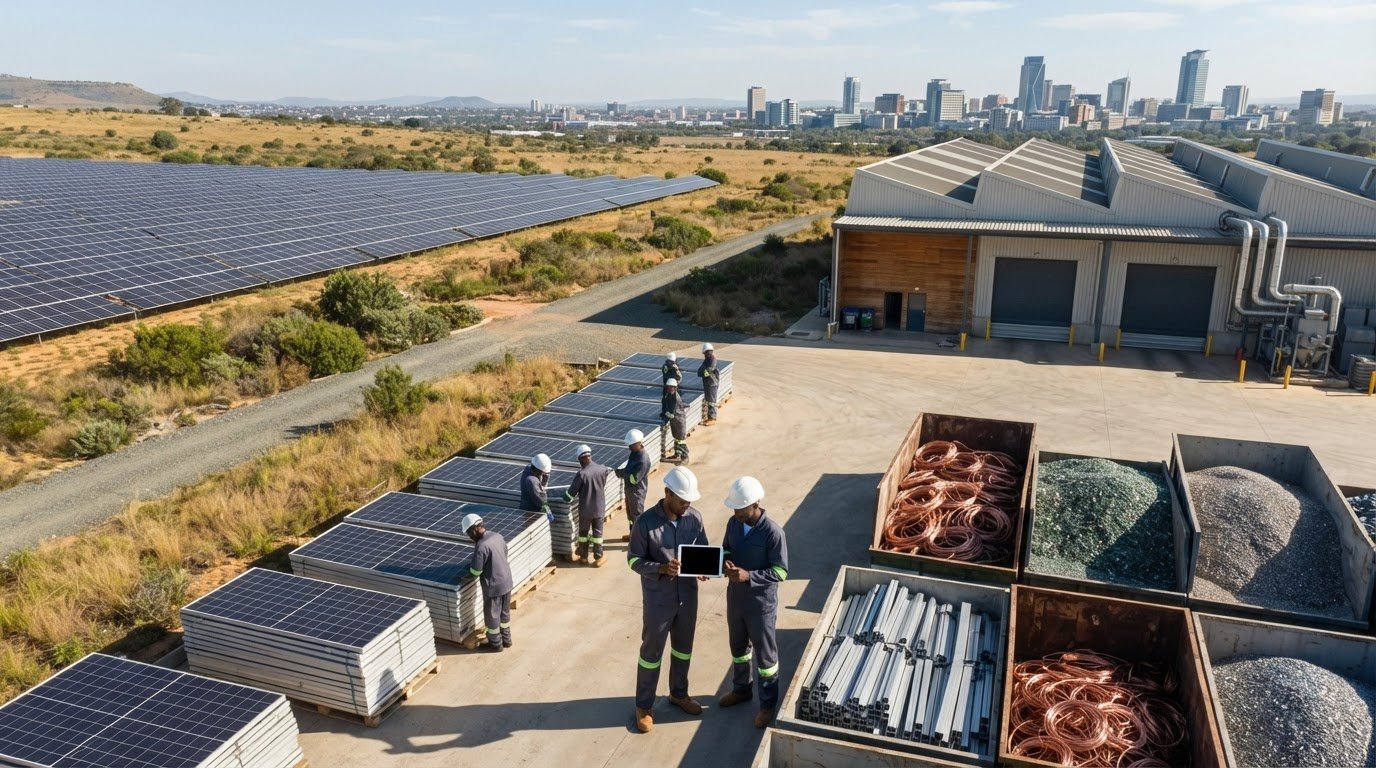
A damaged or underperforming panel isn’t automatically ready for recycling. The commercial decision is whether to repair it, reuse it or retire it, and each route has different handling and record-keeping implications. End-of-life solar panel recycling is not simply a disposal step; it’s an asset-retirement process that should preserve traceability from assessment through to material recovery.
For commercial solar owners in South Africa, uncertainty often starts before a panel leaves the site. You need a clear basis for retirement, visibility into what happens during decommissioning and transport, and evidence of the outcome. This guide sets out a practical sequence to help you distinguish repair, reuse, recycling and disposal, then plan a controlled pathway for the chosen route.
We’ll cover how to assess panels and related equipment, prepare for safe handling, document the transfer and understand which material streams may be recovered, including aluminium, copper, glass and silver concentrates. Greenovations Venture Studio’s commercial solar PV recycling connects decommissioning with certified, auditable recycling, treating retirement as managed asset recovery rather than an untracked end point.
Key Takeaways
- Panel age alone doesn’t determine retirement; condition and operational suitability inform the asset decision.
- End of life solar panel recycling follows a controlled sequence from inventory and assessment through preparation, transport, processing and outcome records.
- Compare continued operation, repair, reuse, recycling and disposal by condition, intended outcome, evidence required and limitations.
- Plan decommissioning by forecasting retirements, recording assets, assessing condition and assigning responsibility for documentation. Verify applicable South African duties separately.
- Greenovations provides certified, auditable decommissioning and recycling for commercial solar assets, with potential recovered material streams including aluminium, copper, glass and silver concentrates.
End-of-life solar panel recycling: when retirement becomes an asset decision
Retirement is an asset decision, not a date printed on a panel’s original warranty or an automatic consequence of age. A panel may remain operational beyond its expected service period, whilst damage, persistent underperformance or a site change can make earlier removal commercially sensible. Base the decision on the equipment’s condition and its role within the wider installation.
End-of-life solar panel management is the controlled process of assessing an asset, deciding whether it should remain in service or be removed, and directing retired equipment towards reuse or material recovery rather than treating disposal as the default. End of life solar panel recycling therefore starts with an assessment and a traceable handover, not with a load of panels arriving at a facility. The broader Solar panel recycling overview outlines the processes and challenges involved in recovering materials from different panel designs.
How to tell whether a solar panel has reached end of life
Distinguish physical damage from routine performance decline. Cracked glass, a damaged frame or visible deterioration may call for prompt inspection and controlled isolation from normal operations. A gradual output decline needs to be assessed against the panel’s historical performance and the installation’s operating conditions. One low-output reading does not establish that a panel has reached end of life.
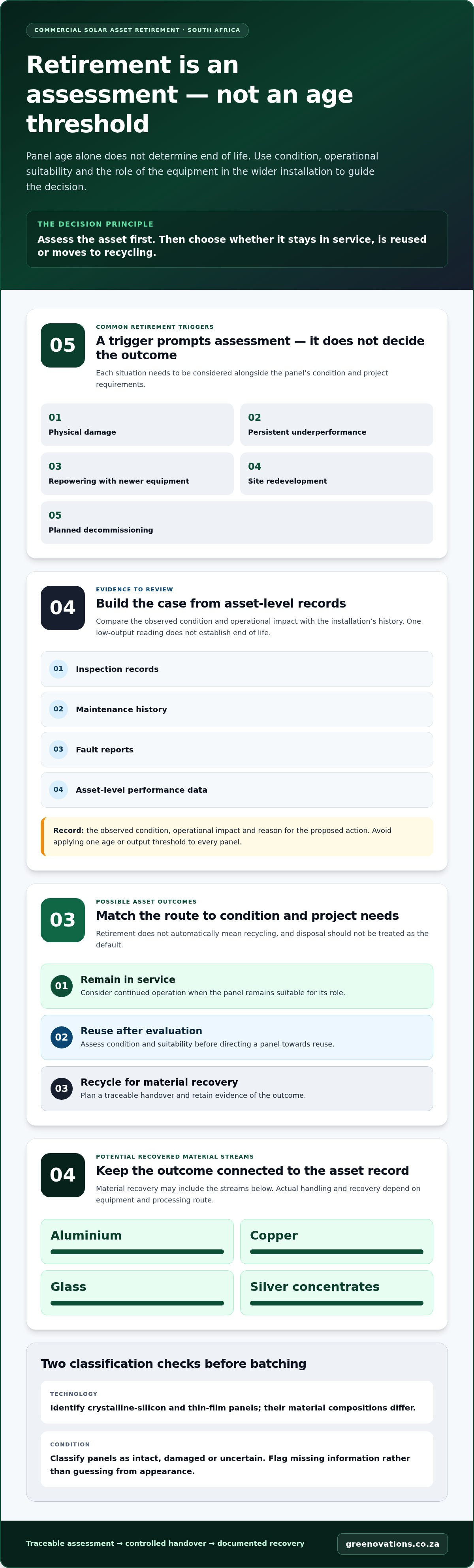
Build the decision from evidence. Review inspection records, maintenance history, fault reports and asset-level performance data. Then consider whether the issue is isolated or affects a larger group. For example, damage concentrated in one section after an incident calls for a different response from a broad performance decline across an installation. Record the observed condition, operational impact and reason for the proposed action. Avoid applying one age or output threshold to every panel.
Common retirement triggers include physical damage, persistent underperformance, repowering with newer equipment, site redevelopment and planned decommissioning. These triggers prompt an assessment; they don’t determine the outcome. Depending on its condition and project requirements, a panel may remain in service, be suitable for reuse after evaluation or require recycling.
Why panel type and condition matter before recycling
Panel construction affects how equipment is prepared and which recovery route is appropriate. Crystalline-silicon and thin-film panels are distinct technology categories with different material compositions. Condition matters too: intact modules, damaged panels and mixed equipment shouldn’t be assumed to follow identical handling or processing routes.
Identify equipment before batching, transport and processing. Capture available manufacturer and model details, technology type, quantity and condition in the asset inventory. If records are incomplete, flag the uncertainty rather than classifying panels by appearance alone. This gives the next stage a sound basis for separating compatible loads and planning handling.
For commercial owners, this discipline protects the retirement decision and its evidence trail. Mixing unidentified panels into a batch can obscure what left the site and complicate later reporting on recovered outputs. Treat identification as a control point: assess the assets, classify them, then define removal and recovery arrangements.
How end-of-life solar panel recycling works, stage by stage
A controlled recycling pathway preserves the link between each retired asset and its eventual destination. For commercial owners, the workflow starts with records and ends with evidence of material outcomes. The End-of-Life Management for Solar Photovoltaics resource from the U.S. Department of Energy provides further context on managing retired PV equipment. The sequence below helps make the handover legible and accountable.
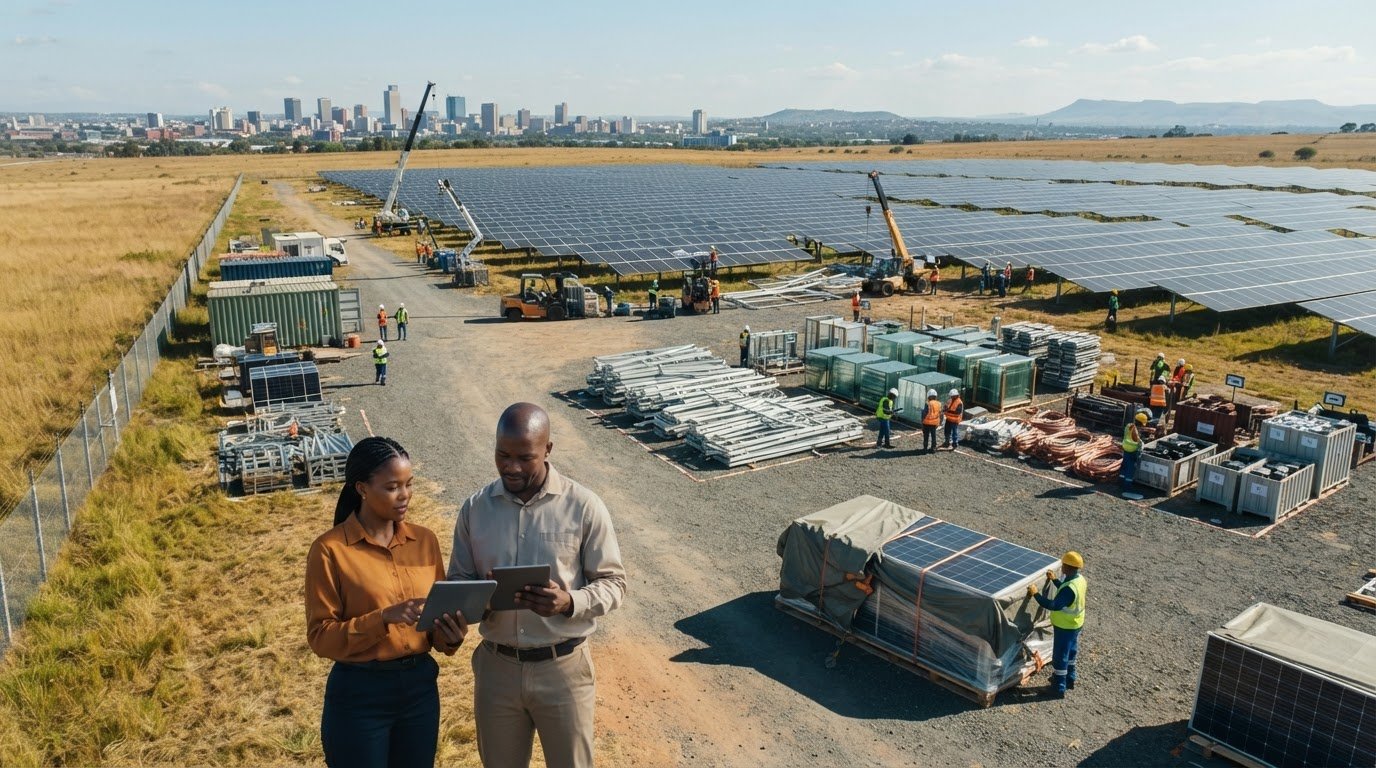
- Inventory the assets. Record panel quantities, available manufacturer or model information, technology type, condition and location within the installation. Include relevant existing asset registers and maintenance records. A usable inventory defines the removal scope and gives you a reference for reconciling what leaves the site.
- Assess and classify. Confirm which panels are intact, damaged or uncertain, and note condition issues that could affect handling or processing. Tie classifications to the inventory rather than relying on a general estimate. The assessment informs decisions about segregation, preparation and the recovery route.
- Prepare for collection. Organise panels into clearly identified groups and plan how they will be handled and packaged. Intact and damaged modules may need different handling arrangements, so don’t place them together without considering the risk of breakage. Plan the movement from the panels’ current position to collection and minimise unnecessary handling.
- Transport under controlled handover. Match the collected load to the inventory and retain transfer records, including quantities and classifications. Packaging and secure movement matter because additional breakage can complicate handling and make the original condition harder to verify. The goal is a reconciled handover, not simply removing equipment from site.
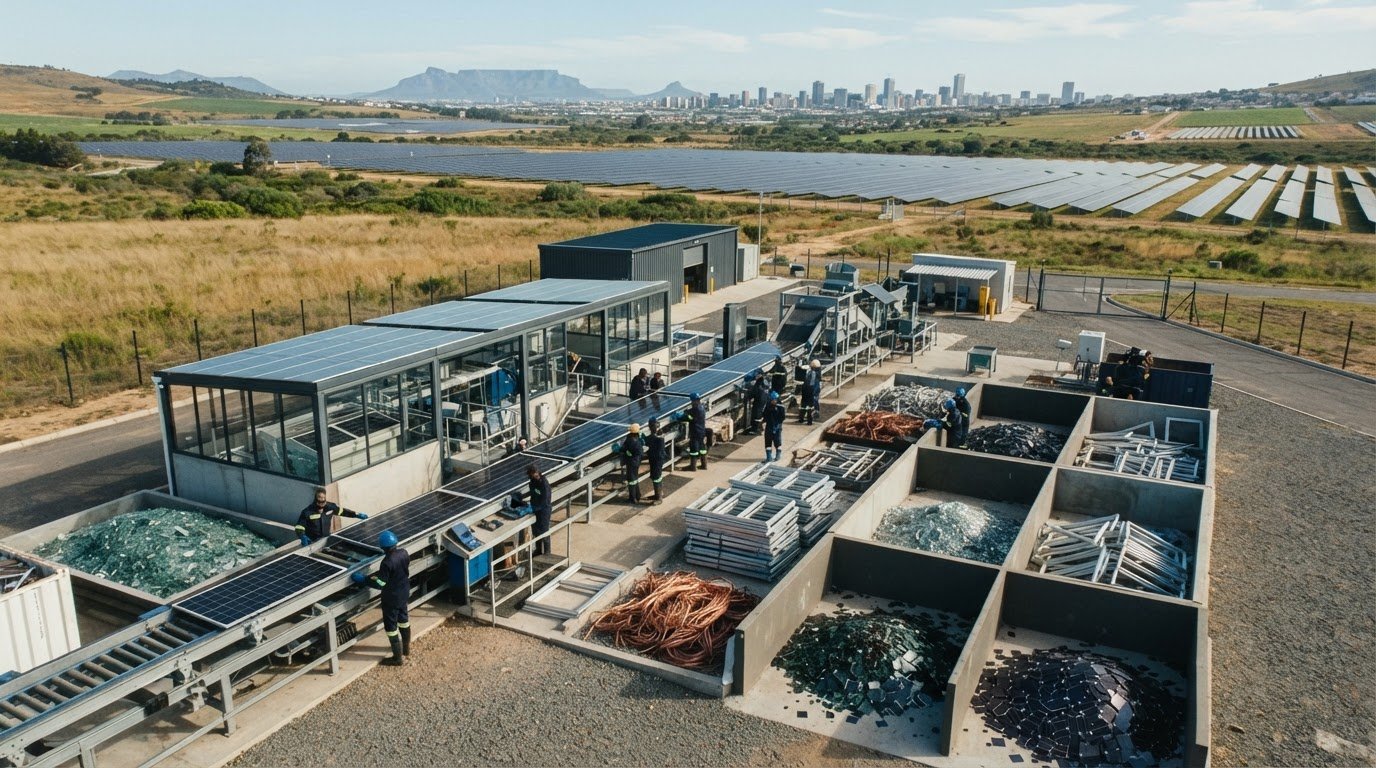
- Process according to panel type. The processor’s route depends on panel construction, condition and process capability. At a high level, frames may be removed, followed by separation of glass, silicon-based components and metal-bearing fractions. Delamination separates the bonded layers of a solar panel so that materials can be handled as distinct fractions. Not every process recovers every component; material quality and the chosen route affect the outputs.
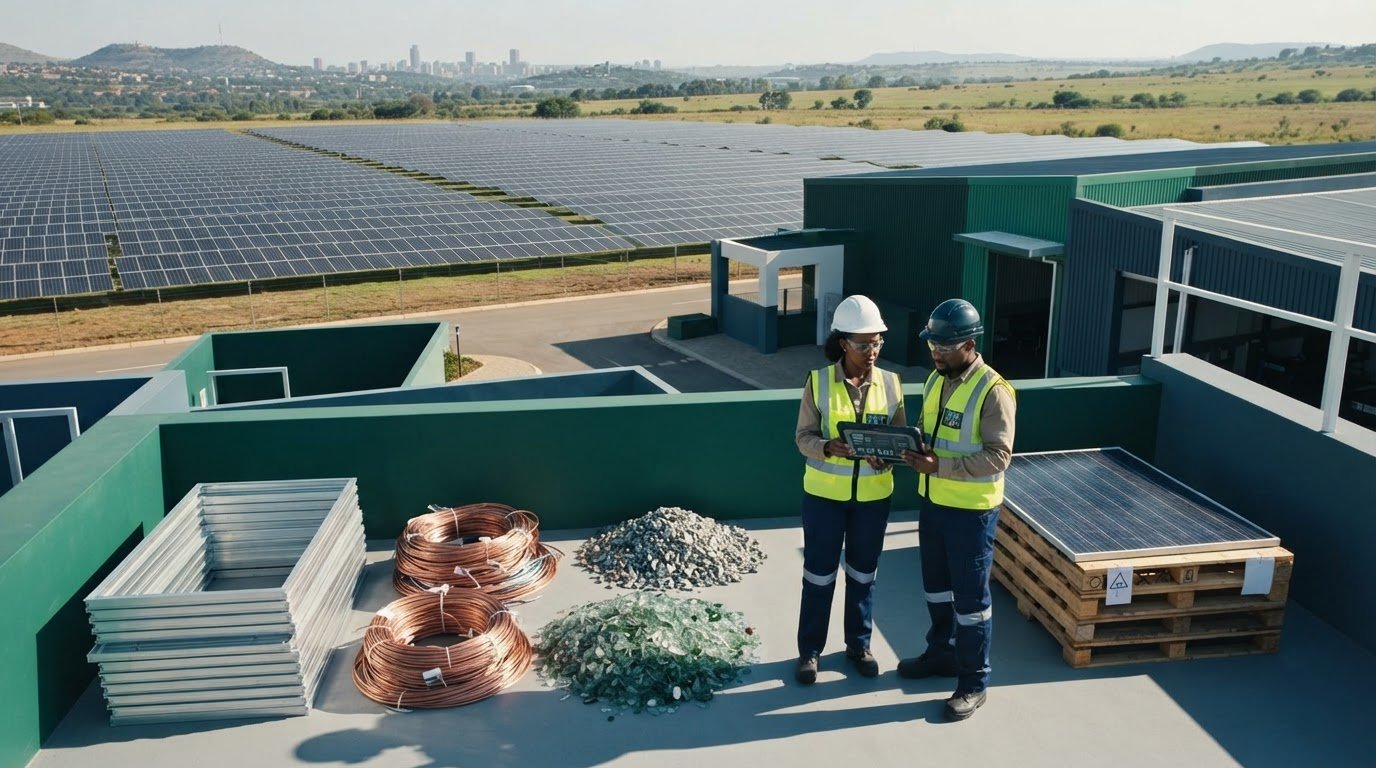
- Document the outcomes. Reconcile incoming panels against the inventory and record the resulting material streams and handling outcomes. Potential recovered streams include aluminium, copper, glass and silver concentrates, but actual outputs vary with technology and processing route. Keep the records together so asset owners can follow the chain from site removal to recovery.
This sequence makes end of life solar panel recycling an auditable operating process rather than an untracked disposal event. Greenovations’ commercial solar PV recycling pathway brings decommissioning and recycling together for commercial solar asset owners, with documented handling and material recovery as the operational focus.
Reuse, recycling or disposal: how to compare end-of-life routes
Choose a route that fits the panel’s condition and the project’s requirements, not one that looks best on a spreadsheet in isolation. End of life solar panel recycling can recover material streams, but reuse may retain more of an asset’s operational value when assessment supports it. Disposal is a managed route for equipment that cannot reasonably be reused or processed for recovery, not a shortcut around documented decision-making.
Use the comparison below to distinguish outcomes and identify the evidence each decision needs. The International Renewable Energy Agency (IRENA) on Solar PV places recycling and reuse within a broader circular approach, but the choice for an individual asset still depends on project-specific facts.
| Route | Condition | Intended outcome | Evidence required | Principal limitation |
|---|---|---|---|---|
| Continued operation | Panel remains suitable for its current role based on assessment. | Keep generating power in the existing installation. | Inspection findings and relevant performance history. | Past output alone doesn’t establish future suitability. |
| Repair | A fault is identified and a repair may address it. | Restore operation without replacing the entire panel. | Fault assessment, repair scope and post-repair checks. | Repair may not be practical or resolve the underlying issue. |
| Reuse or redeployment | Condition and performance evidence suit another application. | Use the panel again, either in place or elsewhere. | Condition assessment and evidence against the receiving application’s requirements. | A suitable receiving use and appropriate handling are still needed. |
| Recycling | Material recovery is suitable for the panel type and condition. | Separate materials into potential recovery streams. | Asset identification, transfer records and processing outcomes. | Not every component becomes a marketable recovered material. |
| Controlled disposal | Reuse or recovery isn’t suitable for the equipment or residual fraction. | Manage the remaining material through an appropriate disposal route. | Condition, route decision and records of handling and destination. | Material value is not recovered from the fraction disposed of. |
When continued use or reuse may be assessed
These options are not interchangeable. Continued operation keeps a panel in its current role; repair addresses an identified fault; redeployment places an assessed panel into a different application. Each requires evidence suited to the decision. A receiving application may have requirements that the panel’s current role does not, so removal from one site isn’t proof of suitability elsewhere. Avoid safety or remaining-life assurances without supporting inspection evidence.
When recycling or controlled disposal is the practical route
Recycling suitability depends on panel construction, condition, processing capability and the quality of the resulting fractions. Aluminium, copper, glass and silver concentrates are potential recovered streams, not a guarantee that all materials will be recovered. Some fractions may have no viable recovery route within the selected process and may require controlled disposal. Record those outcomes separately.
Recovered-material value matters, but it doesn’t determine the preferred route on its own. The decision also needs to account for condition, handling, transport, processing suitability and evidence requirements. A defensible route matches the asset to a feasible outcome and records what happened, without assuming every panel can be reused or every load can achieve complete recovery.
How commercial solar owners can plan panel decommissioning
Decommissioning works best as an asset-control exercise, not an improvised task once removal begins. A clear sequence links the retirement forecast to site work, assigns operational responsibilities and preserves evidence from collection through processing. For end of life solar panel recycling, that record trail supports oversight of what was removed, where it went and what outcomes were reported.
Build a decommissioning plan before removal
Set a forecast alongside repowering schedules, planned site works and operational continuity requirements. Assign responsibility for inventory control, technical assessment, isolation, handling, logistics and document retention. Damaged panels need a handling plan informed by competent technical guidance; don’t assume the same movement controls suit intact and damaged equipment.
- Forecast retirement. Identify the project or operational event driving removal, and align the proposed date with site access, replacement works and continuity planning.
- Establish the inventory. Reconcile asset records against the equipment on site. Capture quantities, available technology and model information, condition, location, and relevant maintenance or inspection records.
- Assess and classify. Record the basis for retirement and distinguish intact, damaged and uncertain panels. Link the assessment to the relevant asset records so decisions can be reviewed.
- Plan removal and movement. Define responsibility for isolation and handling, the movement route, packaging arrangements and the transfer point. Plan to avoid unnecessary handling and additional breakage.
- Assign documentation owners. Identify who will record quantities at collection, retain transfer evidence and obtain processing outcome records. Set the reconciliation point before the load leaves the site.
This is an operational planning framework, not a statement of legal duties. Check requirements for decommissioning, handling, transport and waste management against current South African authoritative guidance and the circumstances of the project. Don’t import United States rules or assume a general operational checklist resolves local compliance obligations.
Create a defensible record of the recycling outcome
Maintain a chain of custody that connects the asset owner, collection, transport and processing stages. Use consistent identifiers and quantities so discrepancies are visible and can be resolved rather than concealed by a broad total. Keep damaged or uncertain equipment identifiable through transfer, and retain reported processing outcomes alongside the original asset inventory.
Minimum audit record: an asset inventory, condition and route decision, collection quantities, transfer records, transport handover details and processor outcome documentation.
- Reconcile quantities: compare the inventory with the amount collected, transferred, received and reported as processed.
- Retain handover evidence: file dated transfer records and the parties responsible at each stage.
- Record outcomes: preserve processor documentation on recovered material streams, residual fractions and any unresolved differences.
Greenovations provides certified, auditable decommissioning and recycling for commercial solar asset owners. Plan commercial solar PV recycling as a documented asset-retirement pathway, with handling and outcomes structured for operational oversight.
Commercial solar PV recycling with Greenovations: close the recovery loop
For commercial solar owners, retirement isn’t complete when panels leave the site. The asset pathway closes when decommissioning, movement and processing are connected to a documented outcome. Greenovations’ Solar PV Recycling provides a commercial route for end-of-life solar assets, combining certified, auditable decommissioning and recycling for commercial asset owners.
What an auditable commercial recycling pathway should deliver
An auditable pathway links the asset information prepared by the owner with the removal and recycling records that follow. It creates a traceable account of what was decommissioned, what entered the recycling process and which material streams were reported. This supports operational oversight; it doesn’t mean every panel component will become a recovered product.
Potential recovered streams include aluminium, copper, glass and silver concentrates. Actual outputs depend on the panels, their condition and the processing route. Distinguishing recovered materials from residual fractions gives owners a more accurate account than a single claim that equipment was “recycled”.
Greenovations’ commercial model includes processing fees and secondary industrial sales of recovered material streams. These are components of the operating model, not a published price or a promise that material sales will offset processing costs for a particular project. The commercial assessment remains tied to the asset scope and the outcomes that can be recorded.
Move from retirement planning to material recovery
Turn the retirement decision into a defined project scope. Assemble the available asset register, panel quantities, technology and condition information, together with the planned removal context. Identify the records that need to follow the equipment through collection and processing. Clear inputs support a controlled handover and a more complete view of the resulting recovery streams.
Greenovations brings commercial solar decommissioning and recycling into one managed pathway. The focus is not simply removing retired equipment, but connecting asset retirement with documented handling and material recovery. This gives owners a practical basis for overseeing the transition and retaining evidence of the outcome.
For commercial owners preparing an asset retirement, explore Greenovations’ solar PV recycling approach and define the information and project scope needed to move from decommissioning to recovery.
Make retirement readiness part of asset governance
Retirement planning belongs within the asset-management framework, not as an isolated task once equipment is already being removed. Treat the decision as a defined project gate: when maintenance, repowering or site-change plans are approved, assign ownership, establish the evidence needed for the retirement decision and determine how the final outcome will be recorded. That makes end of life solar panel recycling a planned operational pathway rather than a last-minute response.
This discipline also helps commercial owners coordinate technical, operational and financial teams. Clear accountability keeps asset records and project decisions aligned, whilst early planning allows the retirement scope to be considered alongside wider site priorities. The result is greater control over the transition from operating equipment to a documented end-of-life outcome.
Greenovations supports commercial solar asset owners with managed PV recycling. Explore Greenovations’ commercial solar PV recycling and take the next step towards a structured retirement pathway for your assets.
Frequently Asked Questions
Is every end-of-life solar panel recyclable?
No. Suitability for end of life solar panel recycling depends on panel technology, physical condition and processing routes. Many panels contain materials that may be recovered, but that doesn’t mean every component can be separated, reused or recovered economically. Recycling is distinct from reuse and disposal. Before planning a large decommissioning programme, document panel types and condition, then assess the proposed route and likely outputs.
Can solar panels be reused instead of recycled?
Yes, continued use, repair or redeployment may be assessed if condition and performance evidence support that route. For instance, a panel removed during site redevelopment might be considered for another application, but its operating history and the receiving system’s requirements matter. Reuse isn’t automatic, and a visual check alone can’t establish remaining service life. If continued use isn’t appropriate, assess material recovery or controlled disposal as the next route.
What happens if a solar panel is cracked or damaged before recycling?
Damage can change how a panel should be handled, transported and processed, so identify and segregate it rather than treating it as an intact unit. Don’t dismantle or attempt to repair a damaged panel without appropriate competence. Record its location, visible condition and quantity in the asset inventory, and use handling procedures suited to the damage and applicable requirements. A crack alone doesn’t establish the panel’s waste classification or final processing route.
What materials can be recovered from old solar panels?
Depending on panel design and processing capability, potential outputs include glass, aluminium, copper, silicon-based material and silver-bearing fractions. These streams aren’t necessarily pure or suitable for the same next use, and the actual result depends on the equipment and process used. Avoid assuming a standard recovery quantity from generic estimates. For a project record, use the processor’s documented outcomes to distinguish recovered materials from fractions that weren’t recovered.
Does South African law classify all end-of-life solar panels as hazardous waste?
No universal classification should be assumed for every panel. Legal treatment may depend on the panel and its waste characteristics, as well as the current requirements that apply to the specific activity. United States Environmental Protection Agency rules aren’t a substitute for South African guidance. Asset owners should check current authoritative South African requirements and obtain competent advice for the relevant waste stream before setting handling, transport or disposal arrangements.
What records should a business keep when recycling solar panels?
Keep records that let you reconcile the equipment at each handover: the asset register, condition and quantity information, collection details, transfer documentation and processing outcomes. If the quantity received differs from the quantity recorded at collection, consistent records help identify where the discrepancy arose. Retain documents together under a project reference. The complete record set may depend on project arrangements and applicable requirements, so this is not a legal checklist.
Visual summary
Planning a project like this?
Talk to the Greenovations venture desk about a No-CAPEX structure.