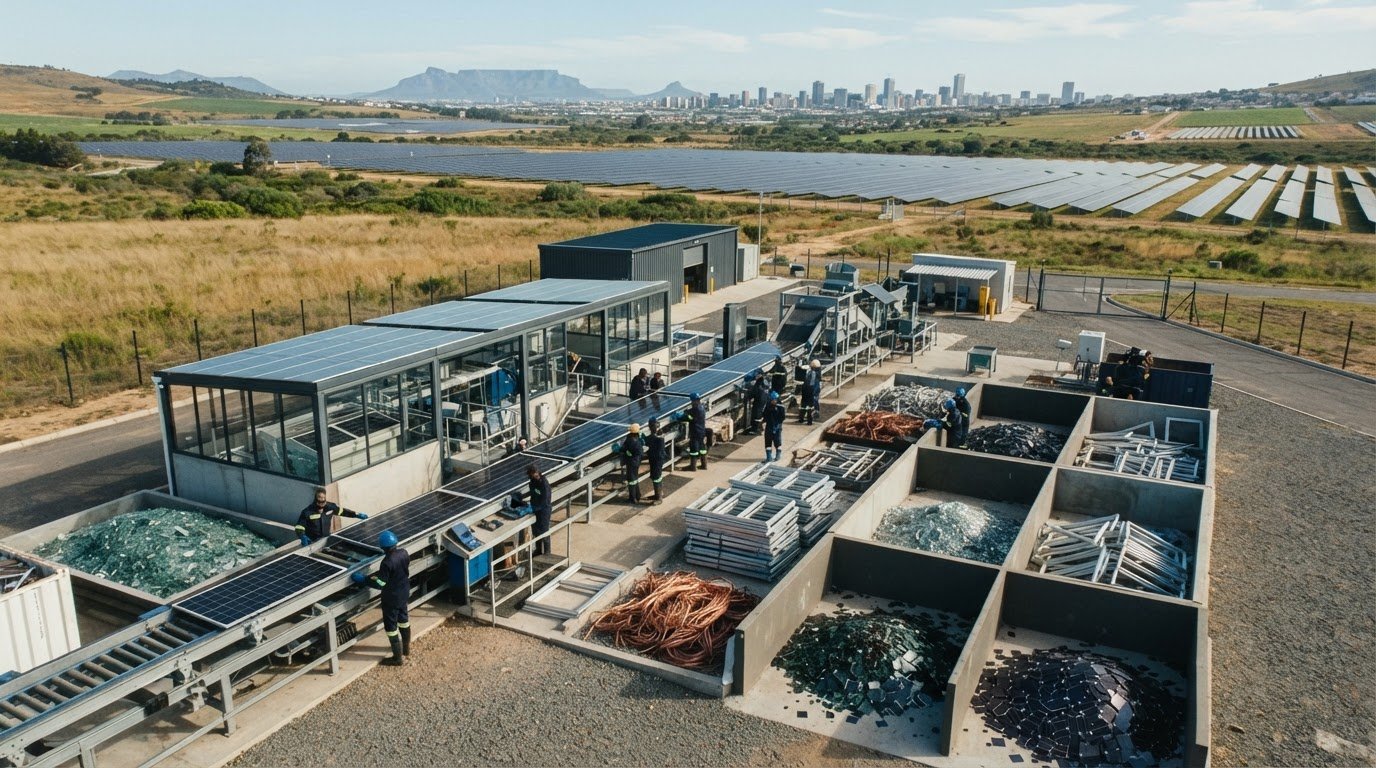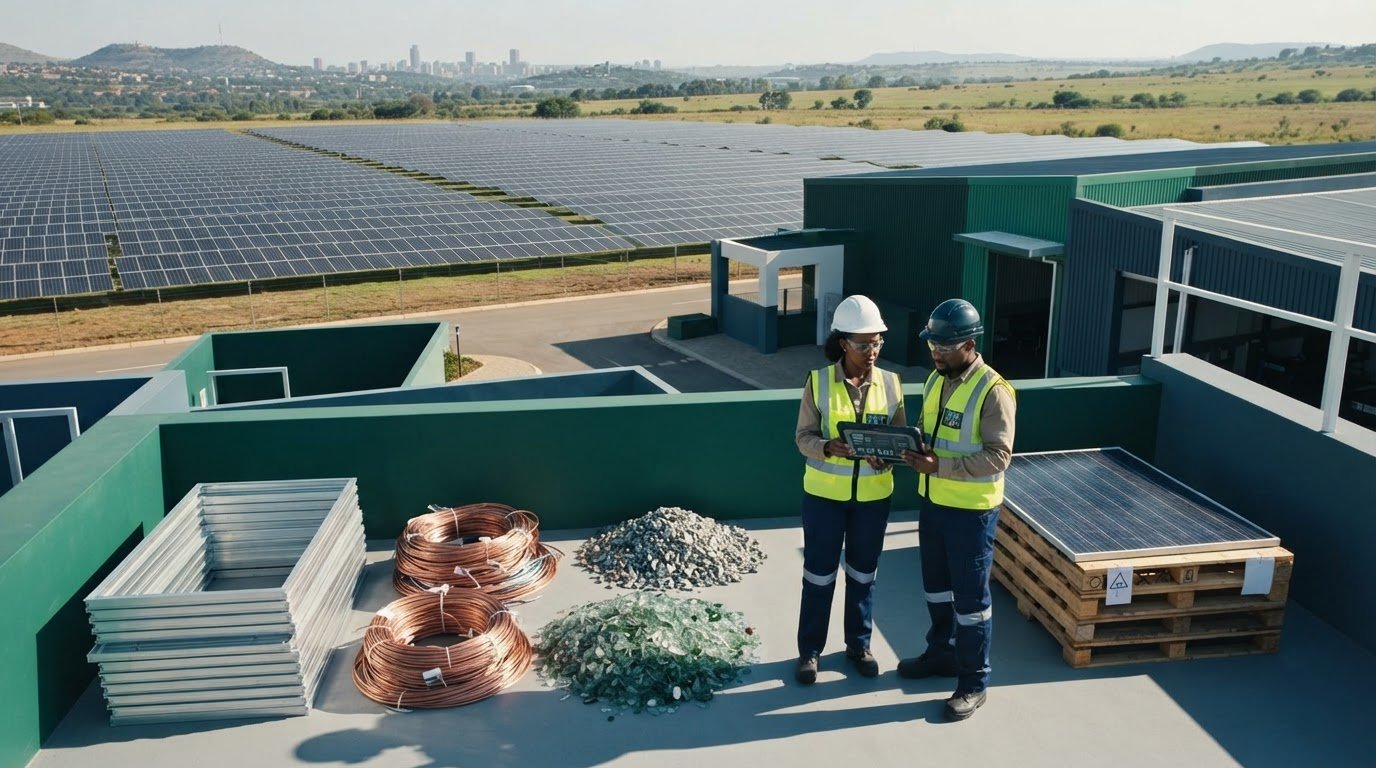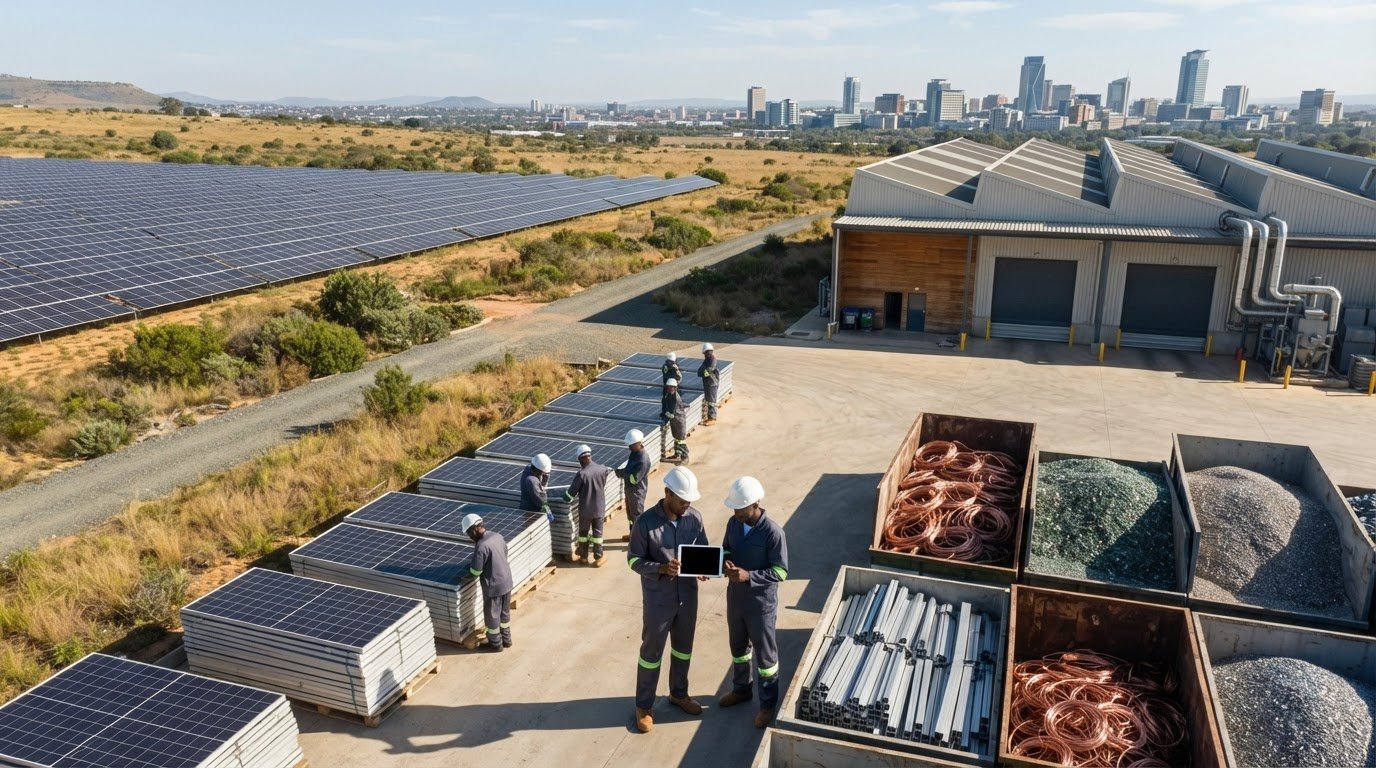
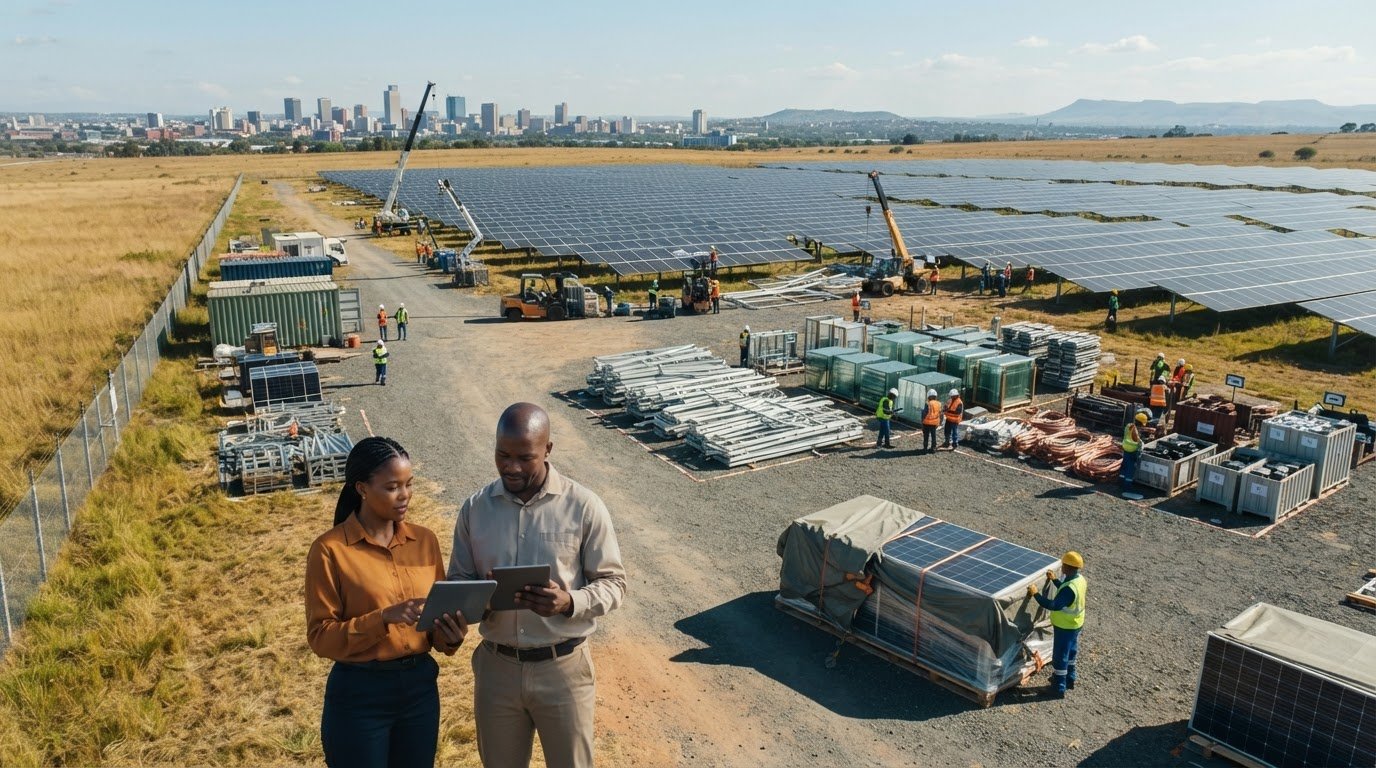
A retired solar array is not simply a disposal job. It is a controlled asset transition. For commercial owners, solar panel decommissioning South Africa involves more than scheduling removal: panels need to move through defined handling, transport and recovery stages, with records showing where the materials went. South Africa’s landfill prohibition makes the route beyond the site a compliance issue, not an administrative afterthought.
The difficult part is often the hand-off. You need a clear sequence for assessing panels, confirming applicable waste requirements, arranging secure movement and verifying downstream processing. A gap in that chain can leave operational, compliance and reporting risks unresolved.
This checklist explains how to plan and manage decommissioning, from project scope and responsibilities to classification, removal, storage, transport documentation and recovery evidence. It also covers how to close out the material record. Greenovations supports commercial solar asset owners with certified, auditable decommissioning and recycling, recovering aluminium, copper, glass and silver concentrates for secondary industrial use. The goal is a documented pathway from retired asset to verified material destination.
Key Takeaways
- Define decommissioning as a managed sequence from asset retirement and removal to documented material routing, not as proof of recycling.
- Maintain a clear chain of custody across inventory, risk assessment, removal, staging, transport and receipt. Match handling plans to panel condition and site risks.
- Compare disposal, recycling and documented material recovery by the evidence each route provides, including destination records and residual waste documentation.
- Use the solar panel decommissioning South Africa checklist to organise planning, site execution, transfer records and close-out evidence.
- Build a regulatory verification step into the project plan by checking current DFFE guidance and requirements applicable to the specific project.
Solar panel decommissioning in South Africa: what the process covers
Decommissioning is a planned asset-management process, not another word for recycling. It establishes why a solar PV asset is being retired, defines what will be removed, controls how equipment is handled and records its route after it leaves the site. In solar panel decommissioning South Africa, asset owners need to manage the on-site hand-off and the downstream destination as separate stages. Removing panels does not, by itself, demonstrate recovery.
Decommissioning covers the planned retirement, removal, handling and documented routing of solar PV assets. Verified recovery requires evidence of what happened to materials downstream. That distinction matters for project control. Panels can be disconnected and taken off site without a complete record of their receiving destination, processing or residuals. Define the project scope before work starts, then maintain records that follow the assets beyond the site boundary.
Replacement, repowering, physical damage or site closure can trigger a review. None of these, including age alone, proves that every panel has reached end-of-life. Assess condition and project requirements before deciding whether equipment will remain in service, be redeployed where appropriate, or enter a recovery route. A Photovoltaic System Overview describes the wider system context. For decommissioning, identify which components are included and manage each material stream distinctly.
Which solar assets belong in a decommissioning scope?
Define the scope around PV modules and list associated equipment separately instead of treating the whole installation as one waste stream. Record who owns the assets, the site boundaries and the project decision-maker authorised to approve retirement and transfer. A practical inventory distinguishes:
- PV modules, including quantity, location and observable condition
- Inverters and other electrical equipment
- Mounting structures, cabling and connectors
- Batteries, where present, as a separate equipment category
This separation helps with planning and prevents records for panels from being confused with records for other equipment. It also gives the project team a defined basis for estimating the work scope and assigning responsibilities.
When should an asset owner begin planning?
Start before removal, while replacement, repowering or closure is still being assessed. Early planning gives the team time to map operational dependencies, access constraints, work sequencing and the intended transfer route. For example, panel removal may need to be coordinated with electrical isolation, continued generation requirements or access for lifting and transport equipment. These factors shape how the work is organised; they do not automatically make a panel waste.
Use verified condition and project requirements to inform retirement decisions. Do not use a standard lifespan as a substitute for assessment. In South Africa, verify current Department of Forestry, Fisheries and the Environment (DFFE) guidance and requirements relevant to the project, equipment and parties involved. Classification, handling and transfer obligations can depend on the circumstances. Treat verification as a planning control, document the basis for decisions and revisit it if the scope changes.
How South African solar panels move from site to material recovery
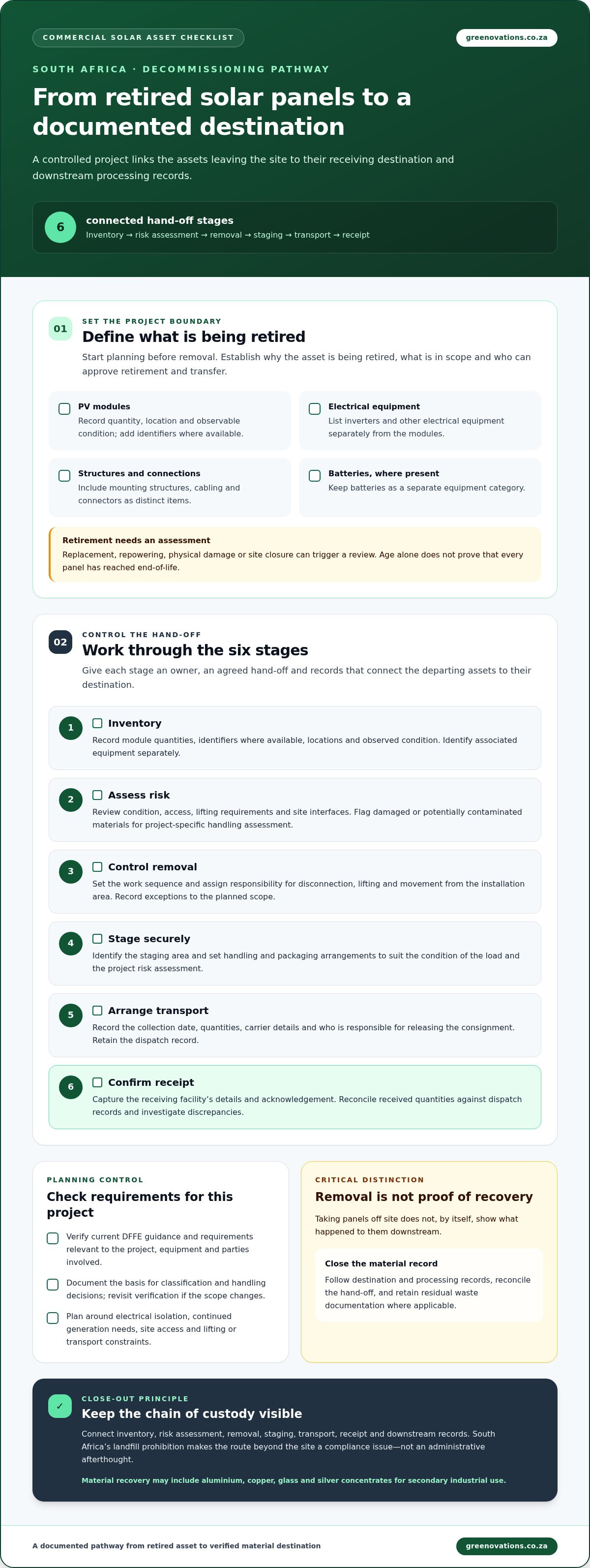
A controlled route begins before a module is lifted and ends only when receipt and processing records have been reconciled. In solar panel decommissioning South Africa, each stage needs a defined owner, an agreed hand-off and records connecting the assets leaving the site with their destination. This makes transport and downstream processing visible parts of the project, rather than an undocumented gap after removal.
Use a sequence suited to the project’s actual site conditions:
- Inventory: Record module quantities, identifiers where available, locations and observed condition. Identify associated equipment separately.
- Assess risk: Review panel condition, access, lifting requirements and site interfaces. Document damaged or potentially contaminated materials for project-specific handling assessment.
- Control removal: Set the work sequence and assign responsibility for disconnection, lifting and movement from the installation area. Record any exceptions to the planned scope.
- Stage securely: Identify the staging area and specify handling and packaging arrangements based on condition and the project risk assessment. Do not assume one method suits every load.
- Arrange transport: Record the collection date, quantities, carrier details and the person responsible for releasing the consignment. Retain the dispatch record.
- Confirm receipt: Capture the receiving facility’s details and acknowledgement. Reconcile quantities against the dispatch record and investigate any discrepancy.
Before removal: inventory, condition and work planning
Complete the baseline inventory before work begins. A site plan linked to asset identifiers, where available, helps the team locate modules and reconcile them after removal. Map access routes, lifting points, staging areas and interfaces with ongoing operations. For example, an active commercial site may need to coordinate removal zones with access restrictions or other scheduled work. Record damaged or potentially contaminated panels separately so their handling can be assessed rather than assumed.
Assign a responsible party to each transfer: release from the work area, movement to staging, collection, transport and receipt. For every hand-off, record who accepted custody, when the transfer occurred and what quantity changed hands. An auditable chain of custody follows the material through every project hand-off, linking the site inventory to receipt and downstream recovery records.
After removal: transport, receipt and processing records
Match the receiving acknowledgement to the dispatch record. If quantities differ, document the variance and its resolution rather than changing the inventory without explanation. Retain available processing and recovery records for project close-out, including details of recovered materials and residuals where supplied. These documents provide a stronger account of the route than a collection docket alone.
Processing records can identify recovered material streams such as aluminium, copper, glass and silver concentrates. They should not imply that every load produces the same outputs or quantities. For commercial owners managing this chain, Greenovations’ commercial solar PV recycling connects decommissioning oversight with documented material recovery.
Disposal versus recycling: assess the South African project outcome
A recycling claim is not the same as a verified recovery outcome. Commercial solar owners should compare project routes by the evidence they produce, not simply by the label used to describe them. The applicable route and requirements depend on the project, so confirm the current South African regulatory position before approving a destination. The comparison below is an oversight tool, not a statement that every route is available or appropriate for every load.
| Assessment point | Disposal route | Recycling route | Documented material recovery |
|---|---|---|---|
| Traceability | Records may show collection and transfer, but not necessarily further processing. | Records should identify receipt for recycling; processing detail can vary. | Records connect the asset or consignment to receipt and available recovery evidence. |
| Destination evidence | Seek documentation naming the stated destination and the basis for the route. | Look for receiving acknowledgement and processing records where available. | Retain evidence identifying the destination and subsequent material pathway. |
| Material reporting | Recovered material reporting may not form part of the route. | Reporting may describe material streams processed. | Available records identify recovered material categories and quantities. |
| Residuals | Document the stated destination of residual material where records provide it. | Request available information on residual fractions and their stated destination. | Include residuals in the project account, without treating them as recovered material. |
Use these distinctions carefully. A dispatch docket shows that a load left the site; on its own, it does not establish what the receiving facility accepted or processed. Likewise, a statement that panels were recycled does not quantify recovered outputs. For solar panel decommissioning South Africa, the project account is stronger when its evidence links the asset inventory to receipt, processing records and any reported residuals. Identify gaps rather than implying certainty.
What evidence demonstrates a controlled recovery route?
Check whether the records tell a consistent story. Reconcile the asset or consignment description across collection and receipt documents, then retain processing records that identify available quantities and material categories. Recovery may include aluminium, copper, glass and silver concentrates, but the project report should state only what its records support. If residual fractions are identified, record their stated destination and flag any information not supplied.
How to interpret costs and recoverable materials
Project economics depend on conditions, not on a fixed value assigned to retired modules. Logistics, panel condition, scale and the available downstream processing pathway can all affect the overall assessment. Recovered materials may have industrial use, but that does not establish a guaranteed market value or mean proceeds will offset removal, transport or processing costs. Keep cost assumptions separate from recovery evidence, and assess each route against the documented scope and project requirements.
The decision standard is straightforward: compare destinations, evidence and residual handling before treating a route as complete. This distinguishes a transfer from a substantiated recovery outcome and gives asset owners a defensible basis for project close-out.
South Africa solar panel decommissioning checklist: plan, execute and close out
A controlled project needs clear decision points before removal, during site work and after the final transfer. Use this checklist to assign responsibility and build a project record that reconciles the original scope with receipt and available processing outcomes. For solar panel decommissioning South Africa, include a regulatory verification step: check current Department of Forestry, Fisheries and the Environment (DFFE) guidance and the South African requirements applicable to the project. Verify relevance to the assets and work involved instead of assuming a requirement applies.
Pre-decommissioning and site execution checks
Resolve the scope and work controls before authorising removal. Record the asset owner, decision-maker, site boundaries, panel quantities and condition, then account for operating constraints and the planned work sequence. Assign a responsible person for each stage, including staging, transfer documentation and issue escalation. Verify applicable legal and safety requirements against current authoritative guidance for the project.
- Planning: Confirm ownership, asset scope, work sequence, site access and operational interfaces.
- Verification: Document the requirements reviewed, relevant guidance and any project-specific determinations.
- Execution: Record condition and quantities before removal, then reconcile collected assets against the baseline.
- Issue control: Flag damaged panels, unclear ownership or scope changes for assessment before they proceed through the planned route.
Keep decisions traceable. If site conditions change the sequence or quantities, record who approved the change and how the revised inventory was controlled. This prevents field adjustments from becoming unexplained variances at close-out.
Close-out documentation and audit readiness
Consolidate evidence after collection rather than leaving records across separate teams or systems. The final file should let a reviewer follow each consignment from the approved scope to receipt and any available processing information. Reconcile quantities across documents and record exceptions openly, including any material whose destination remains unresolved.
- File the approved inventory, condition records and relevant work documentation.
- Retain collection dates, quantities, responsible parties and transport details.
- Attach receiving acknowledgements and note quantity discrepancies with their resolution or status.
- Include available processing and recovery records, distinguishing reported outcomes from assumptions.
- Record documented destinations for residual material, along with corrective actions and outstanding issues.
A missing destination record is an exception to resolve, not evidence of recovery. A dispatch quantity that differs from the receiving record also needs a documented explanation. Close-out is complete when the project can show what was transferred, who accepted it, what downstream evidence exists and what remains unresolved.
For commercial asset owners aligning decommissioning controls with a documented recovery pathway, Greenovations’ commercial solar PV recycling approach provides further information.
Greenovations and auditable commercial solar decommissioning in South Africa
Commercial decommissioning needs an accountable operating model, not a removal instruction followed by an unverified transfer. Greenovations Venture Studio provides commercial solar PV recycling and certified, auditable decommissioning for solar asset owners in South Africa. The work connects PV module retirement to controlled hand-offs and records that support oversight from the defined asset scope through receipt and available processing evidence.
That distinction matters for solar panel decommissioning South Africa. A certificate or recycling statement alone does not provide a complete project account. Asset owners need records showing what was included, what changed hands and what downstream information is available. Keep documented facts separate from assumptions and outcomes that have not been evidenced.
What auditable decommissioning means for asset owners
Auditable work is a documented sequence, not a single end-stage document. It links the agreed PV asset scope to removal and transfer records, receiving information and available processing records. Consistent documentation gives project teams a basis to reconcile quantities, identify exceptions and maintain reporting discipline across the material pathway.
For an asset owner, this structure supports operational control and a defensible close-out account. If a receiving record differs from the original inventory, the variance can be identified and addressed rather than hidden by a general recycling claim. Records also help distinguish confirmed processing information from unresolved destinations. They support oversight, but do not by themselves determine the project’s regulatory position or guarantee a particular environmental outcome. Applicable requirements still need to be assessed against the project’s circumstances.
From retired PV assets to secondary material recovery
Greenovations Venture Studio’s recovery activities include aluminium, copper, glass and silver concentrates for secondary industrial use. These are material categories recovered from PV assets, not intact panels returned to service. The distinction matters in project reporting: the original asset, the materials produced through processing and any residual fractions are separate parts of the account.
Describe outputs only to the level supported by project records. Where quantities or processing details are available, they can help owners understand the material pathway and reconcile the close-out file. Do not infer a recovery rate, assume every load produces identical outputs or treat potential material value as a guaranteed financial return. Recovery is an industrial pathway, and its documented outputs depend on the processing records for the project.
Greenovations Venture Studio’s commercial solar PV recycling connects retired assets to secondary material recovery, with auditable decommissioning supporting visibility across hand-offs. Greenovations Venture Studio’s solar PV recycling approach outlines this commercial asset-management pathway.
Set the recovery pathway before work is authorised
The next decision is not simply when to remove panels. It is how to build responsibility for their onward route into the project plan before work is authorised. For solar panel decommissioning South Africa, define who owns each decision, what evidence must be retained and how exceptions will be escalated. This gives operations, procurement and asset-management teams a shared control framework before site activity begins.
Make the recovery pathway part of the project’s execution design, not a close-out task delegated after collection. Clear accountability helps teams address gaps while they can still be investigated, preserving a more complete record for internal review and future asset decisions. The result is a firmer basis for managing the transition from operating infrastructure to retirement without overstating what the records prove.
For commercial solar asset owners preparing a documented recovery pathway, contact Greenovations about commercial solar PV recycling.
Frequently Asked Questions
What does solar panel decommissioning involve in South Africa?
Solar panel decommissioning South Africa involves managing the retirement of solar assets from the decision to remove them through to their documented downstream route. The project team defines which equipment is in scope, records its condition, plans removal and handling, and arranges transfer and receipt. Removal is not recycling: collection evidence alone does not establish what was processed. Verify legal and safety requirements against current South African guidance relevant to the site and material stream.
When should a commercial solar panel decommissioning plan begin?
Begin planning while replacement, repowering or site closure is being assessed, before removal dates are fixed. This gives operations teams time to identify dependencies, such as whether equipment needs to remain available until replacement capacity is commissioned. It also allows ownership, access arrangements, work sequencing and record responsibilities to be resolved in advance. Age alone does not set a decommissioning deadline; timing depends on verified condition, operational needs and the asset owner’s project decision.
Are solar panels classified as hazardous waste in South Africa?
Do not apply a blanket answer to every panel stream without assessment. Classification depends on the applicable South African requirements and the material’s characteristics and condition, including whether panels are damaged or mixed with other equipment. Before transport or processing, document the basis for the project’s classification and check current Department of Forestry, Fisheries and the Environment (DFFE) guidance. Do not infer that panels are harmless or hazardous based only on their general description.
What documents should be retained when decommissioning solar panels?
Retain records that let a reviewer trace the assets from the site inventory to their documented destination. A project file can include condition and quantity records, work approvals, collection and transfer details, carrier information, receiving acknowledgements and available processing evidence. Add a note for any discrepancy, missing document or residual material whose destination is recorded. The precise record set depends on project circumstances and applicable requirements, so confirm that the file is adequate for the specific work.
Can damaged solar panels be recycled?
Damaged panels may need a different handling or processing assessment from intact stock, so record them separately and describe their visible condition before removal. For example, do not group a cracked module in the inventory as equivalent to undamaged panels if its condition could affect staging or transport arrangements. Establish a suitable handling plan, keep damaged stock identifiable and document the receiving pathway. Whether a panel can enter a recycling route depends on assessment and project requirements.
What happens to materials recovered from decommissioned solar panels?
Processing may recover material categories such as aluminium, copper, glass and silver concentrates for secondary industrial use. These outputs are distinct from the retired panel itself and should be described as recovered materials only where project records support that description. Actual outputs depend on the panel stream and processing route. Do not assume every consignment yields the same materials, a particular recovery rate or a financial return; use the processing documentation to state what was reported.
How can an asset owner verify that panels reached a recycling facility?
Reconcile the asset inventory with collection records, transport details and a receiving acknowledgement that identifies the destination and consignment. Then review any processing documentation available for that load. If the receiving quantity differs from the dispatch record, or a document is missing, record the variance and its resolution rather than treating the transfer as fully evidenced. A general recycling statement offers less traceability than linked records showing the hand-offs and what the receiving party confirmed.
Visual summary
Planning a project like this?
Talk to the Greenovations venture desk about a No-CAPEX structure.