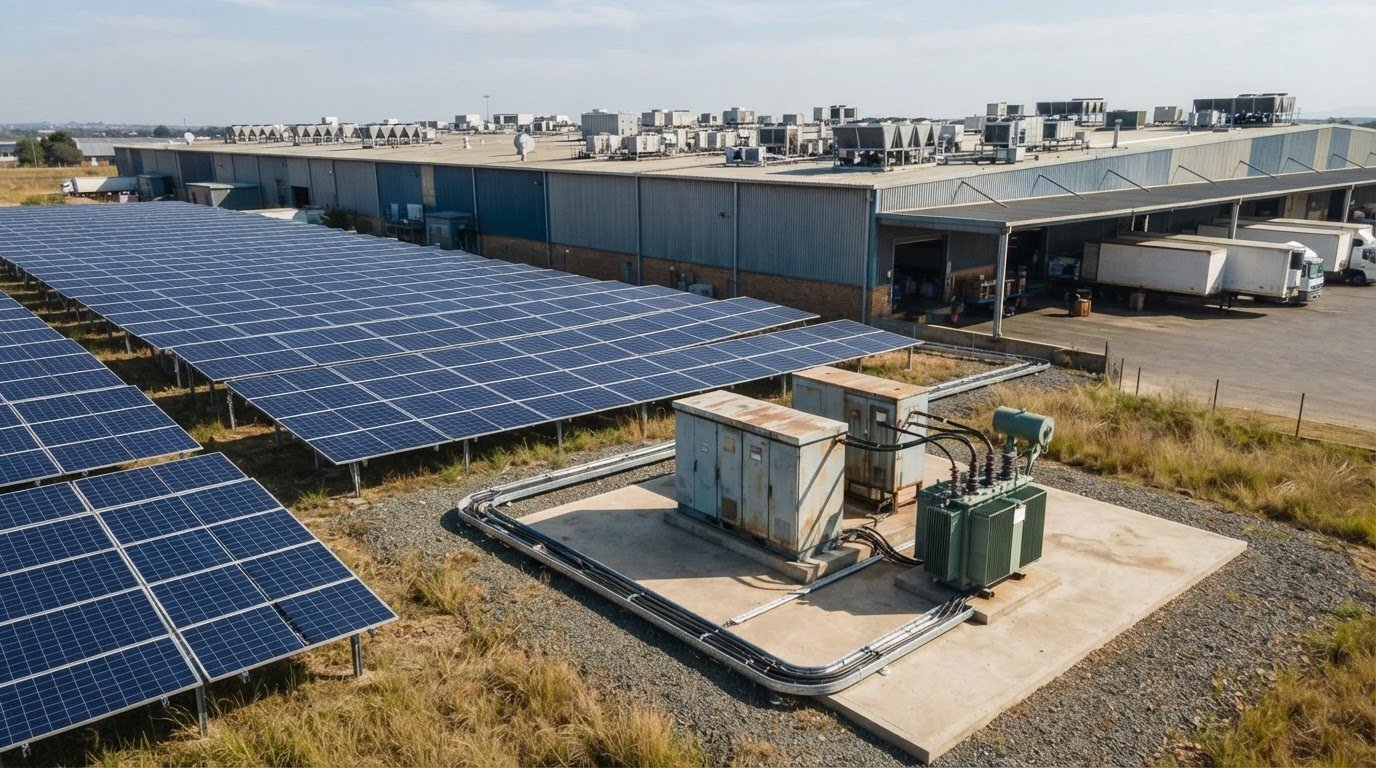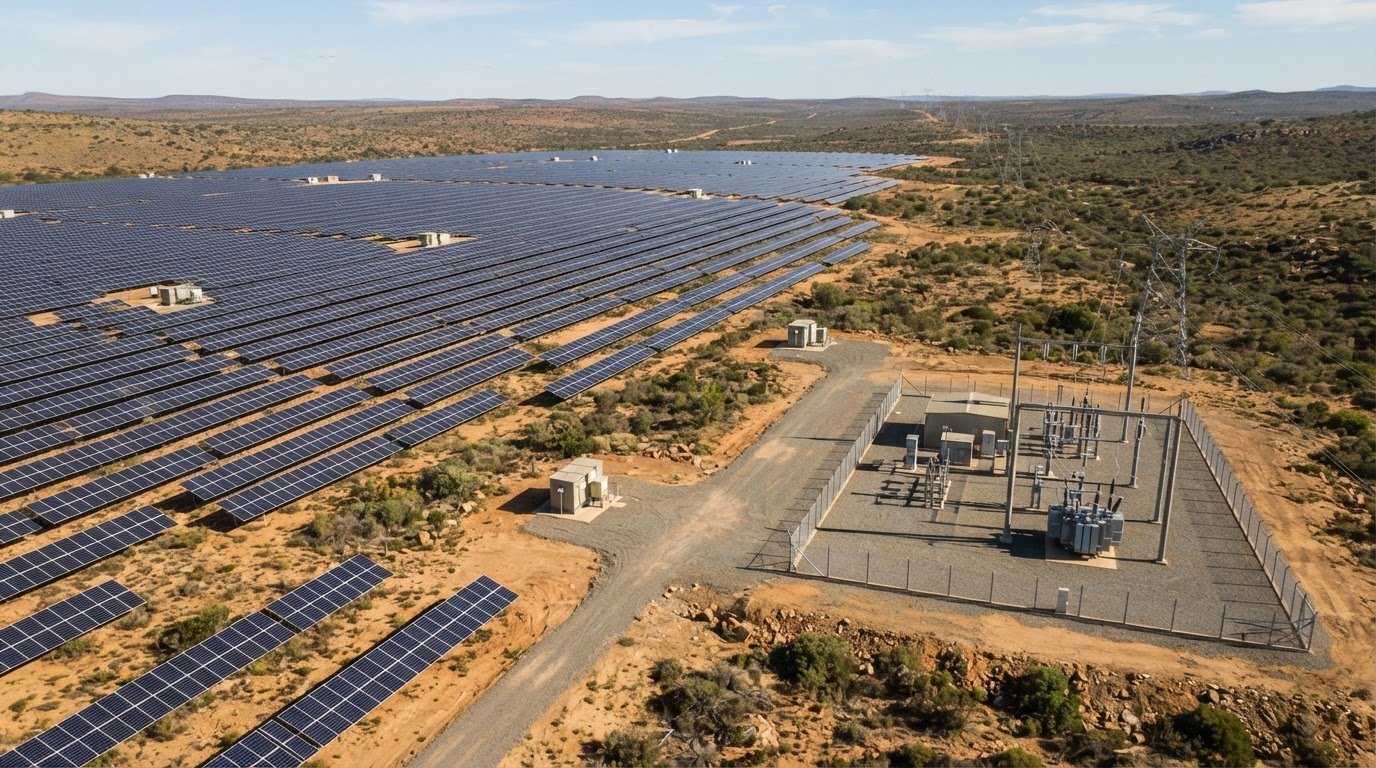

Industrial solar does not have to start with an upfront capital commitment. No-capex industrial solar solutions let a business use a solar plant without paying the full installation cost upfront. Under a power purchase agreement (PPA), a provider finances, designs, builds and operates the plant, while the business buys the electricity it generates at an agreed rate.
The appeal is straightforward: preserve capital for core operations while adding on-site generation. But “no capex” does not mean no commercial obligation. A PPA or lease creates a contract, and its rates, duration, operating responsibilities and exit terms shape the value of the arrangement.
This article explains how these models work in South Africa, who handles maintenance, and how to assess electricity rates and contract terms against your facility’s consumption and operations. It also compares the structures, highlights obligations to consider over the life of an agreement, and explains when an approach without upfront capital may suit an industrial site. The focus is practical: understand the payment mechanism and allocate operational responsibilities before signing.
Key Takeaways
- Assess whether preserving upfront capital aligns with your facility’s energy use, investment horizon and operational priorities.
- Identify who operates and maintains the solar plant, and how responsibilities are set out in the agreement.
- Compare the electricity rate structure and contract terms to understand the long-term commercial commitment.
- Separate PPA and lease obligations before deciding which financing model fits your business’s requirements.
What is Zero CAPEX for Solar Installation?
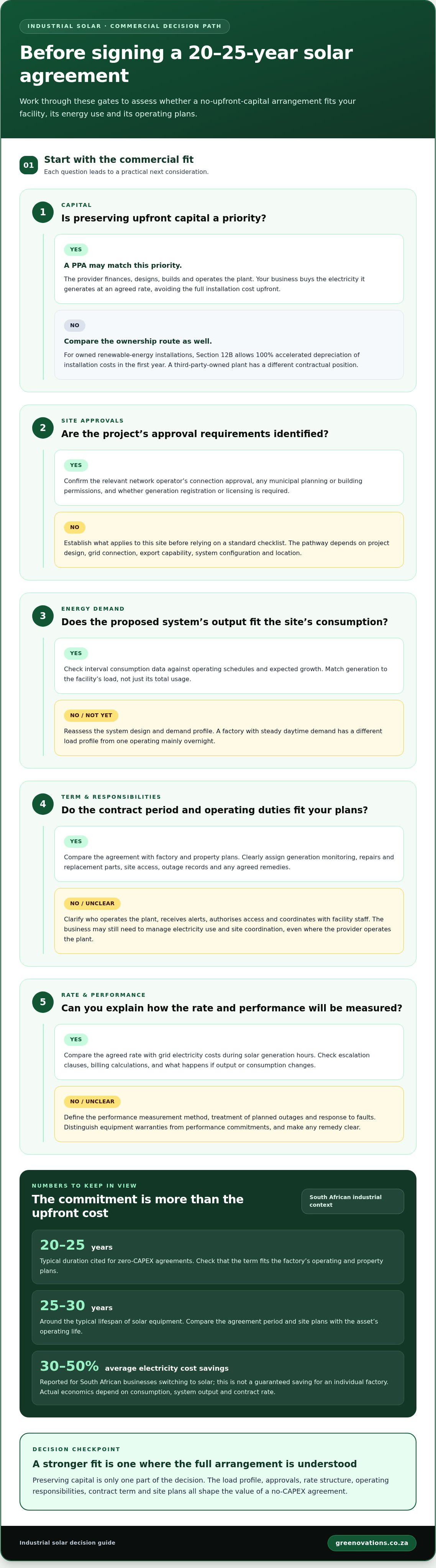
Zero CAPEX means a business uses a solar installation without paying its full installation cost upfront. In a power purchase agreement, a provider finances, designs, builds and operates the plant. The business then buys the electricity generated at an agreed rate. This avoids the initial capital outlay but creates ongoing contractual commitments.
In South Africa, the approvals pathway depends on the project design and grid connection. Establish which connection approval the relevant network operator requires, and identify any municipal planning or building permissions that apply. The assessment should also determine whether generation registration or licensing is required. Export capability, system configuration and site location all affect the process, so there is no single checklist for every project.
Assess suitability against three commercial factors: available capital, energy use and investment horizon. A facility that wants to preserve capital for production equipment may prefer contracted payments to direct asset ownership. Compare the proposed system’s output with the site’s consumption patterns, operating hours and expected growth. A factory with steady daytime demand has a different load profile from one operating mainly overnight.
Property value should be assessed through asset rights, not assumed uplift. A roof-mounted system, land-based plant and long-term energy contract affect property transactions differently. Record who owns the equipment, what happens when the site is sold, and whether access or removal obligations continue. For owned renewable-energy installations, Section 12B of South Africa’s Income Tax Act allows 100% accelerated depreciation of installation costs in the first year. A business using a third-party-owned plant should distinguish its contractual position from ownership-related tax treatment.
Commercial solar systems are designed around site demand and can use suitable roof space or available land. A practical assessment starts with interval consumption data, operating schedules and expansion plans, then matches generation to the facility’s load. Solar equipment has a typical lifespan of around 25-30 years. The investment horizon therefore matters: compare the contract term and site plans with the asset’s operating life, rather than treating zero upfront CAPEX as zero long-term commitment.
Solar system operation and maintenance responsibilities
A solar contract should clearly assign operating and maintenance duties. These responsibilities affect plant performance, site access and how the factory responds when faults interrupt generation.
Operating the Solar System
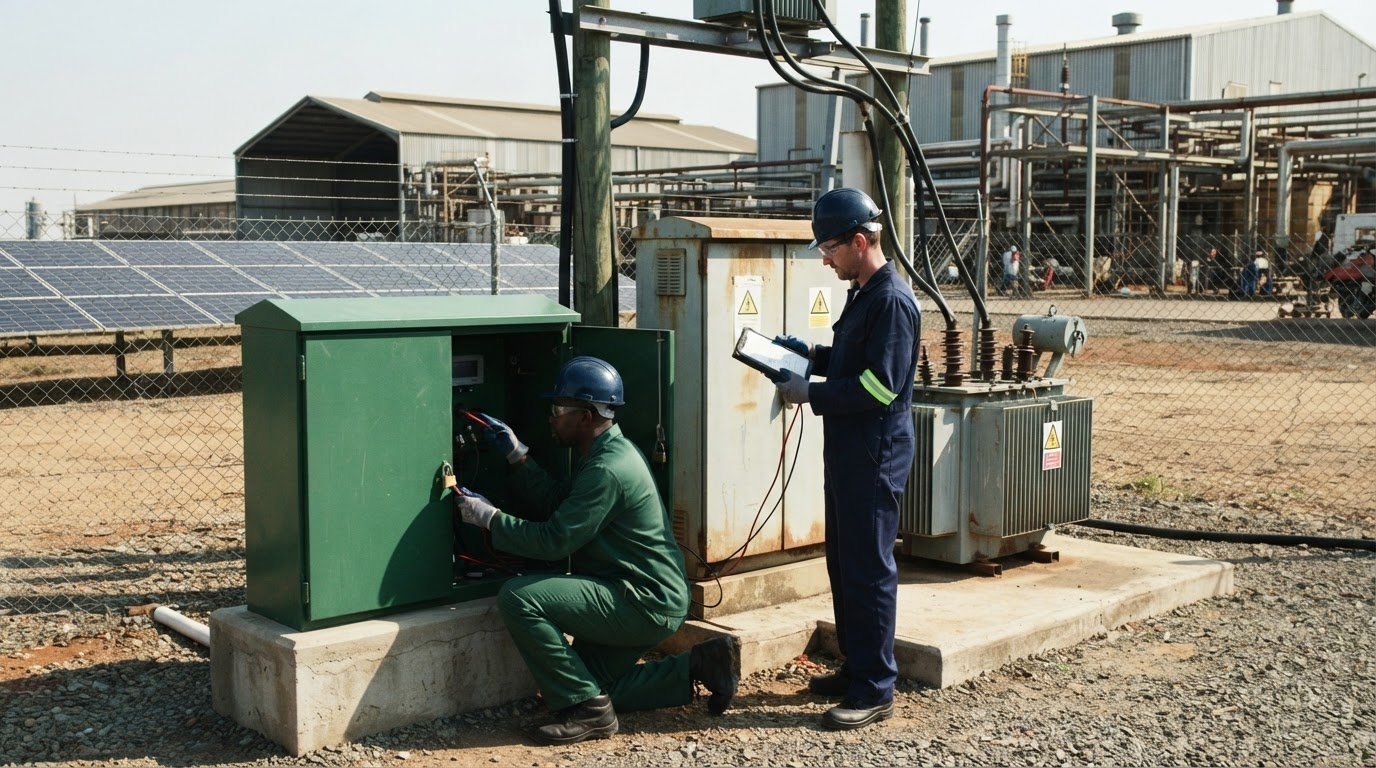
Operating a solar system involves monitoring generation, managing faults and coordinating maintenance access. At a factory, these tasks must fit production schedules and site safety procedures. A PPA may assign plant operation to the provider, while the business manages its electricity use and site coordination. The contract should specify who receives alerts, authorises access and informs facility staff about interruptions.
Guarantees and Maintenance Obligations
A performance guarantee sets a contractual measure for plant output or availability; maintenance obligations define the work that supports it. A headline guarantee is of limited value without a measurement method and remedy. Define how output is recorded, how planned outages are treated and who responds to faults. Distinguish equipment warranties from performance commitments, as they cover different risks.
During consultation, the project team assesses the site, demand profile and operating constraints. The agreement should assign responsibility for coordinating installation with factory operations. After commissioning, specify the maintenance schedule, reporting format and escalation route. For example, a fault that affects a production shift needs a clear notification process, not an assumption about who will respond.
Review the contract for clear ownership of these responsibilities:
- Monitoring generation and reporting performance data.
- Arranging inspections, repairs and replacement components.
- Coordinating site access and safety procedures.
- Recording outages and applying agreed remedies.
These allocations matter under both PPAs and leases, but the parties’ duties depend on the agreement. A factory should distinguish plant maintenance from its own obligations, such as providing agreed access or protecting equipment from site activities. For lifecycle planning, include solar PV recycling when considering equipment retirement and material recovery.
Contract duration, electricity rates and provider reputation
Contract terms determine whether projected savings translate into lasting value. In South Africa, compare the electricity rate with your site’s actual consumption and tariff structure.
Contract Terms and Electricity Rates
A solar contract sets the agreement period, payment basis and rate applied to generated electricity. Zero-CAPEX agreements typically last 20 to 25 years, so the commitment must fit the factory’s operating and property plans. Compare the PPA rate with the cost of grid electricity used during solar generation hours. Review escalation clauses, billing calculations and what happens when output or consumption changes.
South African businesses switching to solar energy save an average of 30-50% on electricity costs. That figure is not a guaranteed saving for an individual factory; actual economics depend on its consumption profile, system output and contract rate.
Tariffs, Charges and Wheeling
Eskom or municipal tariffs affect the value of each unit generated, while network charges may still apply when solar supplies part of the site’s demand. Compare the PPA rate with the charges the facility can avoid, not with its entire electricity bill. Fixed charges and demand-related costs may continue, depending on the site’s tariff arrangement.
For wheeled electricity, consider the energy price alongside network use and applicable charges. The comparison should reflect delivery arrangements, consumption timing and billing treatment. Model a factory supplied by a municipality separately from one billed by Eskom.
PPA Risks and Hidden Costs
PPA risks increase when payment triggers, outages or termination obligations are unclear. Review escalation formulas, minimum purchase commitments, insurance responsibilities, site-access terms and early-exit provisions. Identify any charges for grid connection, metering or facility changes. These factors can affect the total economics even when installation requires no upfront capital.
No single provider is the right fit for every South African factory. Look for a provider able to finance, build and operate a plant under terms that match the site’s load, tariff and operating horizon. Compare contract structures, performance reporting and responsibility for faults rather than relying on brand claims alone.
Zero-CAPEX solar financing through PPAs or leases
Power purchase agreements and leases both reduce upfront capital requirements, but they allocate payments and operating responsibilities differently. Comparing the structures helps factories choose no-capex industrial solar solutions that fit their energy demand and commercial priorities.
Power Purchase Agreements
A power purchase agreement (PPA) lets a business buy electricity generated by a plant financed and operated by a provider. The factory pays an agreed rate for the electricity supplied rather than funding the full installation upfront. Because payments are tied to energy supply, the tariff formula, metering basis and treatment of outages matter. Compare expected generation with the factory’s consumption profile and production schedule.
For example, a facility with seasonal production should understand how the PPA bills electricity when demand falls. The agreement should explain how metered output is calculated, which charges apply and what happens during interruptions. These details show how costs relate to actual supply instead of leaving the outcome to assumptions.
Solar Leases
A solar lease gives a business the right to use a solar installation in return for lease payments. Unlike a PPA, payment is generally for use of the equipment, not for each unit of electricity generated. The lease sets out who owns and maintains the system and how performance issues are handled. This distinction matters if generation falls, because lease payments may not change with output.
Compare both structures using the same facility data: consumption, operating hours and planned site changes. Then review payment terms, maintenance responsibilities, insurance, access requirements and end-of-term arrangements. No-capex industrial solar solutions shift the initial funding burden, not the need to understand long-term commitments. Neither model is inherently cheaper; costs depend on the agreed rate or lease payment, contract terms and operating profile.
For a project-focused discussion of industrial infrastructure priorities, contact Greenovations Venture Studio.
Greenovations Venture Studio: Drone-Powered Industrial Intelligence (GII)
Greenovations Venture Studio offers Drone-Powered Industrial Intelligence (GII) for businesses seeking industrial intelligence to inform infrastructure decisions. It is relevant when your needs extend beyond comparing solar PPAs, leases and electricity rates to broader industrial intelligence.
Keep the scope clear: GII provides industrial intelligence, not a solar financing contract. For businesses considering end-of-life equipment, Greenovations Venture Studio also offers Solar PV Recycling. These are separate offerings for different operational needs.
Contact Greenovations Venture Studio to discuss GII, or visit greenovations.co.za.
Turn the energy decision into an industrial strategy
When assessing no-capex industrial solar solutions, start by defining the operational outcomes the investment must support. Map energy procurement against production priorities, asset plans and wider infrastructure requirements. This broader view helps decision-makers distinguish the financing structure from any additional industrial capabilities they may need.
Greenovations offers Drone-Powered Industrial Intelligence (GII), an Electric Vehicle Ecosystem and Sustainable Seating Infrastructure-as-a-Service. Each addresses a different infrastructure or operational need, so the right discussion depends on your organisation’s priorities. A clear brief covering your facility, desired outcomes and decision criteria gives that discussion a practical starting point.
Contact Greenovations Venture Studio to discuss your industrial priorities. A disciplined next step can turn a complex energy decision into a clearer commercial plan.
Frequently Asked Questions
What is an IPP?
An independent power producer (IPP) generates electricity for sale to an off-taker or other buyer. In an industrial arrangement, the factory consumes contracted power while the producer manages generation under the agreement. The contract should specify how delivered energy is measured and billed, and how the parties handle changes in the factory’s demand.
What is a PPA?
A power purchase agreement (PPA) is a contract to buy electricity from a generator on agreed commercial terms. It defines the relationship between the producer and the off-taker, including how supplied energy is measured and charged. When reviewing a PPA, compare its billing basis with your factory’s meter data instead of relying only on headline tariff comparisons.
What no-CAPEX solar financing models are available for industrial businesses in South Africa?
Industrial businesses can consider a power purchase agreement or a solar lease. Under a PPA, payment is linked to electricity supplied; a lease charges for use of the installation under its agreed terms. Energy-as-a-service can package infrastructure and operating responsibilities into a contracted service. Before choosing, compare what each payment covers, who operates the system and how the contract treats outages.
What are the typical PPA rates per kWh for industrial solar in South Africa?
There is no single PPA rate per kilowatt-hour for every industrial site. A project-specific tariff depends on factors such as the facility’s consumption profile, system design, operating pattern and contract structure. Assess the proposed rate against the electricity costs solar supply can displace, while accounting for applicable network charges. A rate is provided after a quote request.
How do solar leases, PPAs, and energy-as-a-service compare for factories?
A PPA charges for electricity supplied, while a lease charges for the right to use equipment. Energy-as-a-service can combine equipment and operating services in one contract. For a factory planning a production-line expansion, compare how each model responds to changes in demand, maintenance needs and site layout. The best fit depends on which party carries operating responsibilities and how payments relate to the facility’s use.
What contract terms, minimum durations, and credit requirements apply to no-CAPEX solar deals?
Zero-CAPEX solar agreements typically last 20 to 25 years, so review renewal, early termination, site-sale and end-of-term provisions alongside the payment terms. Credit requirements are project-specific rather than a single standard threshold. Underwriting may consider the business’s financial position, consumption profile and ability to honour long-term payments. The agreement should make payment triggers, security arrangements and default consequences explicit before signature.
Visual summary
Planning a project like this?
Talk to the Greenovations venture desk about a No-CAPEX structure.