The next phase of solar PV utility hubs in South Africa will depend on grid access and project economics, not irradiation alone. The country’s solar energy market is projected to reach 16.88 gigawatts by 2031, but that growth depends on getting generation to buyers through a constrained transmission system. Strong solar resources create an opportunity; they don’t, by themselves, make a project viable.
That makes the investment case more complex than simply securing land in an area with high solar irradiation. Curtailment can limit how much electricity a plant sells, while transmission access, connection capacity and the route to market determine whether its output can generate revenue.
This article examines factors shaping the next phase of solar PV utility hubs in South Africa: grid constraints, curtailment, transmission access, solar irradiation and land. It explains how these conditions interact and why disciplined site selection and infrastructure planning matter to a utility-scale solar project’s commercial case.
Key Takeaways
- Assess a utility-scale project by its route to market and development readiness, not capacity potential alone.
- Map grid access and curtailment exposure early, since generation has limited commercial value if it cannot reach buyers reliably.
- Compare solar resource with land suitability and transmission proximity to identify sites with a stronger overall case.
- Understand how utility-scale hubs differ from standalone plants, and where industrial intelligence can support better project decisions.
What’s next for South Africa’s solar industry?
South Africa’s solar sector is expanding, but capacity figures depend on category and reporting date. Operational private solar PV stood at 6,142 MW within 8,969 MW total operational solar PV. Operational REI4P solar PV contributed 2,287 MW as of July 2024, while RMIPPPP accounted for 540 MW. These figures show several routes to generation, from independent producers to public procurement.
Rooftop and concentrated solar power add distinct capacity profiles. Rooftop solar reached 5,791 MW as of July 2024, while installed CSP capacity was 500 MW. By May 2024, embedded PV capacity was almost double utility-scale PV capacity. Embedded systems generate closer to demand; utility-scale plants supply larger networks or contracted buyers. Utility-scale generation typically refers to installations larger than 50 MWₚ, primarily supplying the national grid.
Against wind and coal, solar is growing from a different base. Coal accounted for 77% of electricity generation, while wind capacity stood at 3,670 MW. Distributed solar places generation closer to users; utility hubs concentrate output at larger sites. Both models depend on matching production with network capacity and demand.
There is no single applicable figure for project costs or tariffs. Costs depend on equipment, land, financing, connection works and operations. Tariff terms are set by the Power Purchase Agreement (PPA) and electricity delivery arrangements.
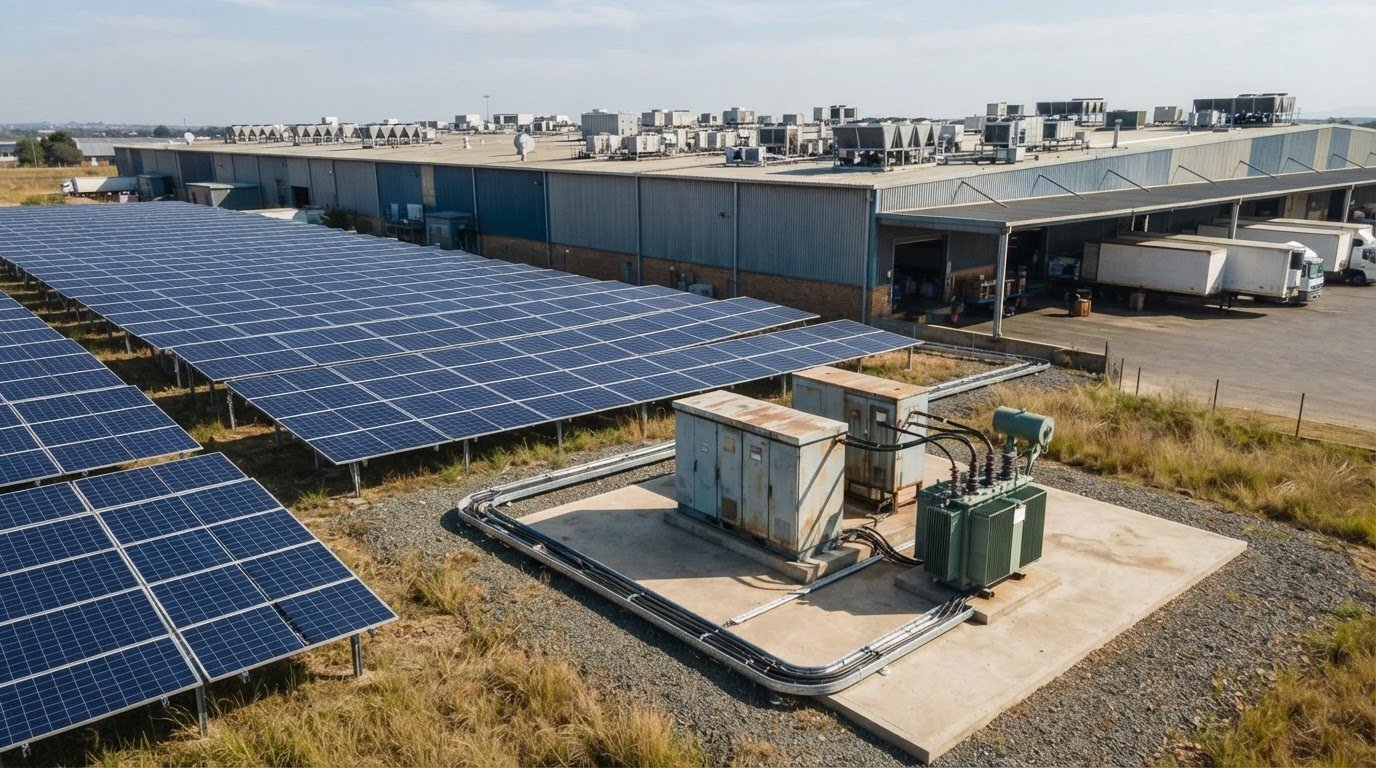
Solar projects are developed across South Africa at sites selected for solar resource, land suitability and grid access. These factors need to work together: strong solar irradiation alone does not make a site suitable for a utility hub.
Economic and community benefits depend on project execution. Construction, maintenance and local supply chains are channels for employment, while contracted generation supports industrial energy planning. Three solar plants provide power for around 90,000 South African households.
Historical capacity figures help illustrate the development of South Africa’s solar sector. The next phase depends on developing viable sites and connecting generation to buyers.
Grid connection bottlenecks and curtailment
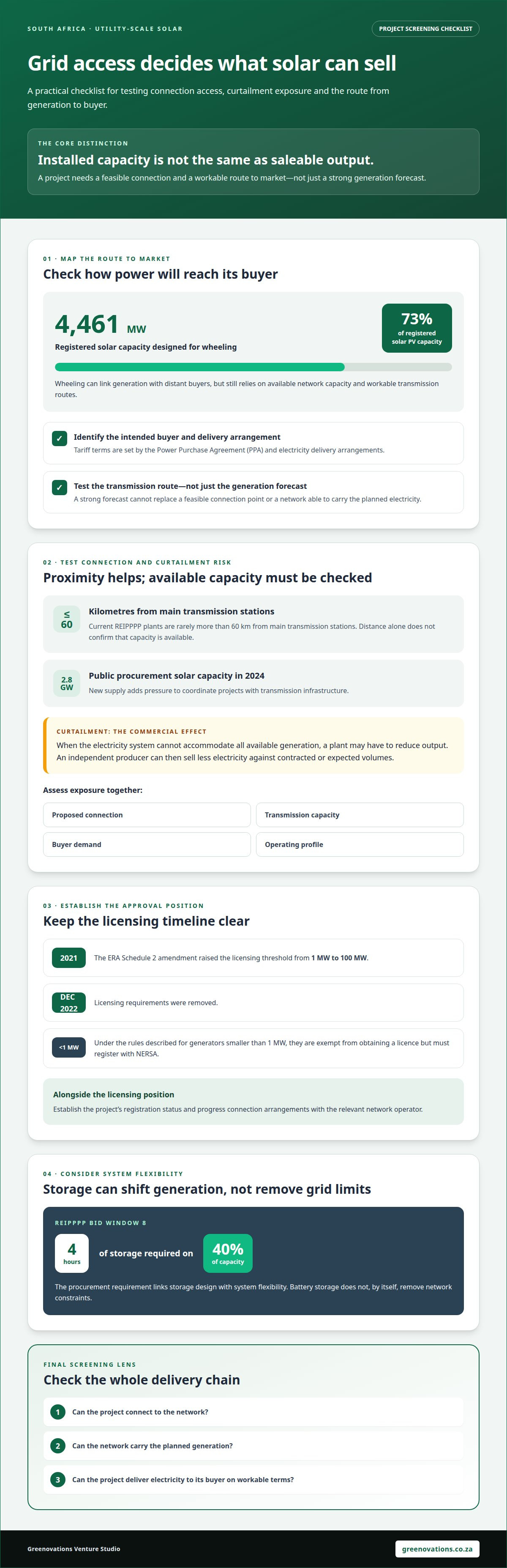
Grid access can constrain a solar project before construction begins. Registered solar capacity designed for wheeling reached 4,461 MW, representing 73% of registered solar PV capacity. Wheeling can connect generation with distant buyers, but it still depends on available network capacity and workable transmission routes. A strong generation forecast cannot replace a feasible connection point.
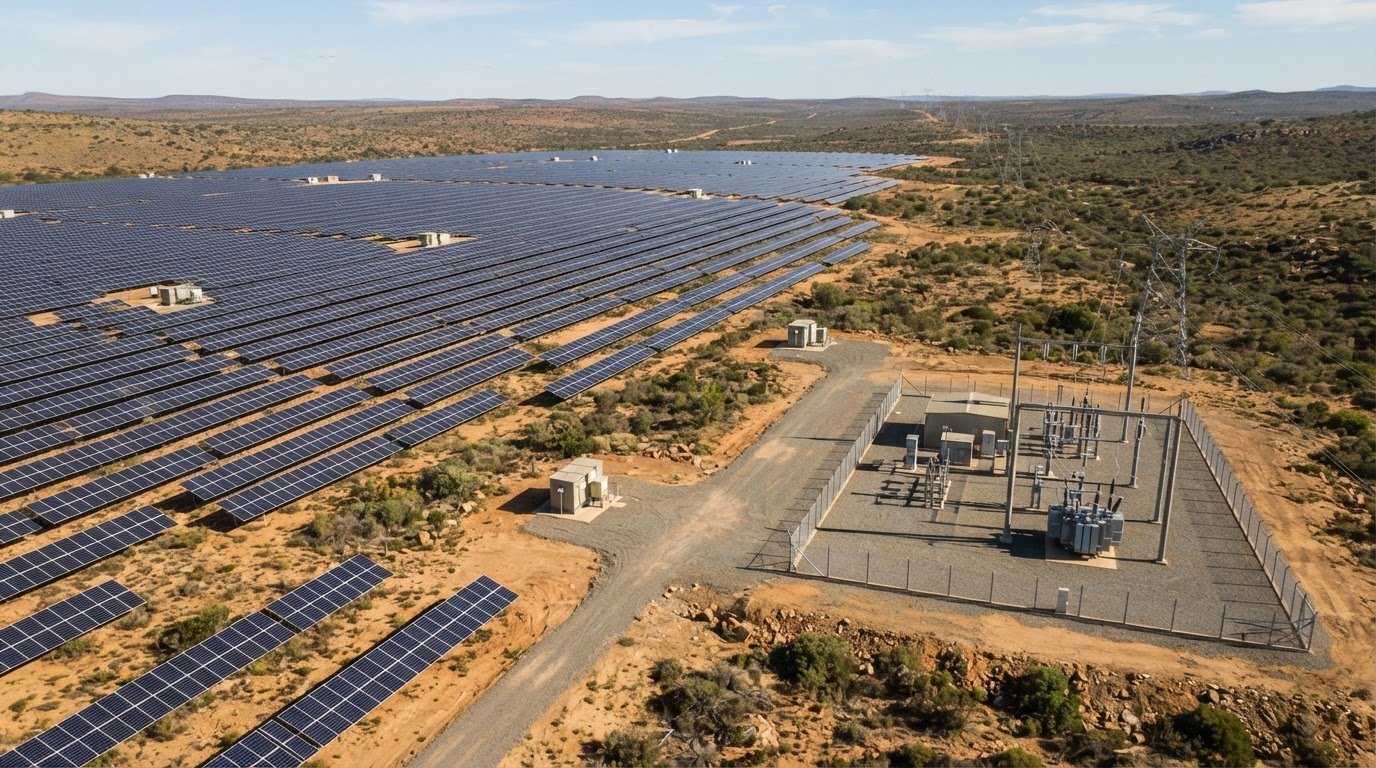
Transmission access therefore shapes site selection and project economics. Current REIPPPP plants are rarely more than 60 km from main transmission stations, underscoring the value of proximity. That distance alone does not establish available capacity: developers also need to understand connection constraints and whether the network can carry planned electricity generation. Public procurement projects contributed 2.8 GW of solar capacity in 2024, adding further pressure to coordinate new supply with transmission infrastructure.
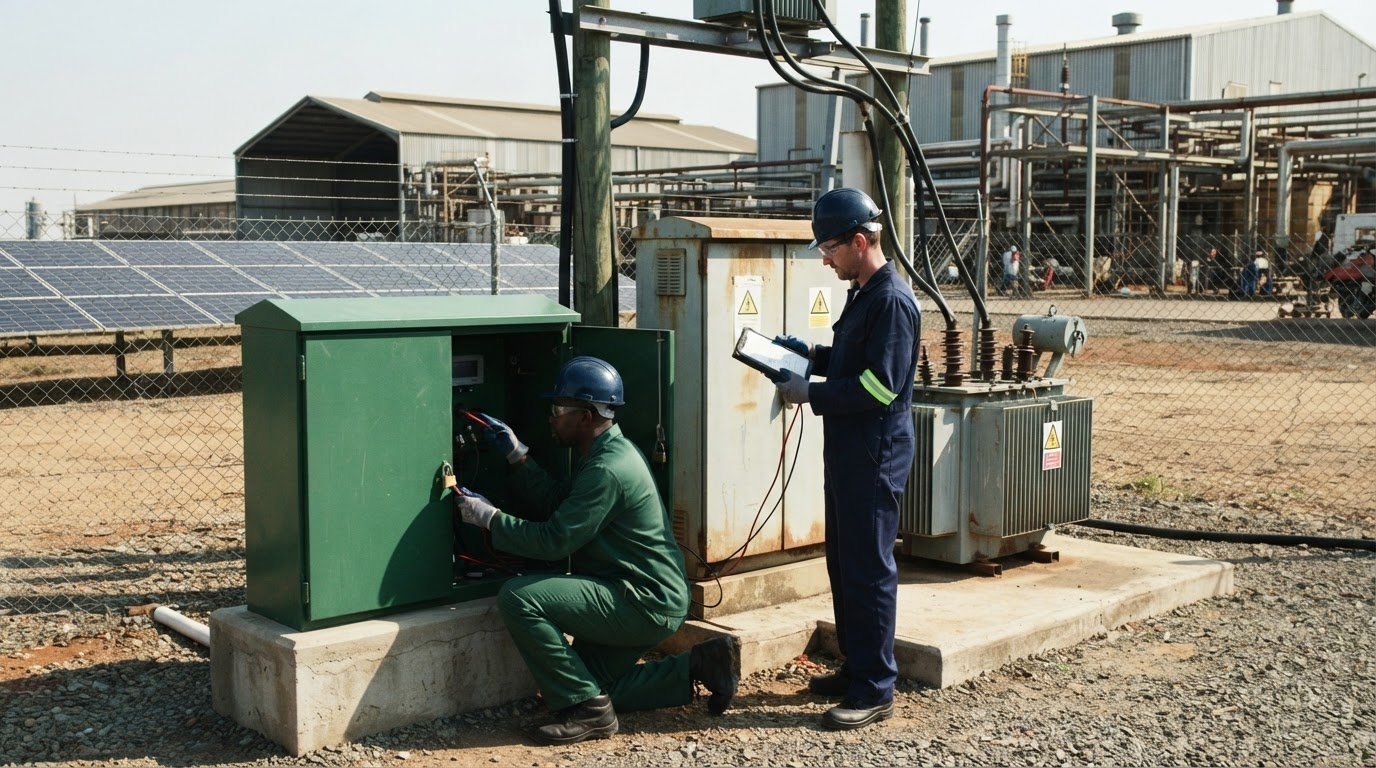
For permits and grid approvals, developers must establish the project’s licensing and registration position, then progress connection arrangements with the relevant network operator. The 2021 ERA Schedule 2 amendment raised the licensing threshold from 1 MW to 100 MW, before licensing requirements were removed in December 2022. Under the rules described for generators smaller than 1 MW, those generators are exempt from obtaining a licence but must register with NERSA.
Curtailment occurs when a plant must reduce output because the electricity system cannot accommodate all available generation. For an independent producer, this can reduce the electricity sold against contracted or expected volumes. Assess exposure by considering the proposed connection, transmission capacity, buyer demand and operating profile together. Installed capacity is not the same as saleable output.
Battery storage can help shift generation, but it does not remove network constraints. REIPPPP Bid Window 8 required four-hour storage on 40% of capacity, linking procurement design with system flexibility. Project teams can make grid risk visible through project-level grid planning, testing connection access and revenue assumptions before committing capital. That sequence helps accelerate investment only where the network and commercial case align.
Solar irradiation and land availability
Solar resource is one site-level input, not a substitute for full project screening. Compare measured irradiation with developable land, access, transmission routes and the operating design. Assessments in South Africa need to establish how these factors interact at the proposed site, since strong solar exposure alone does not demonstrate viability.
A study estimates that solar radiation across approximately 200,000 km² could meet Africa’s projected power needs in 2040. That estimate demonstrates the scale of the continental resource, not the area available for a specific South African development. Site teams must map gradients, drainage, access roads and current land uses before fixing a proposed layout.
Solar PV utility hubs can affect land through habitat disturbance, fragmentation, erosion and changes to drainage during construction and operation. Early environmental and land screening in South Africa can identify sensitive areas, existing land users and physical constraints. Use these findings to inform the site layout and construction controls, rather than treating them as a late-stage compliance exercise.
Assess each candidate site in stages: measure its solar resource, identify usable land, assess access and grid proximity, then compare the proposed layout with expected demand and generation. Make the assumptions in the project report clear, including how the selected technology, panel arrangement and operating conditions affect expected output. This allows decision-makers to compare sites on consistent terms.
Let the site assessment guide procurement, rather than using irradiation as the sole selection criterion. Storage can shift when electricity is delivered, but it cannot fix unsuitable land or poor access. Utility-scale solar depends on aligning resource quality, developable area, grid connection and buyer demand. Assessing these factors together reveals land and delivery constraints before capital is committed.
What are utility-scale solar PV hubs in South Africa?
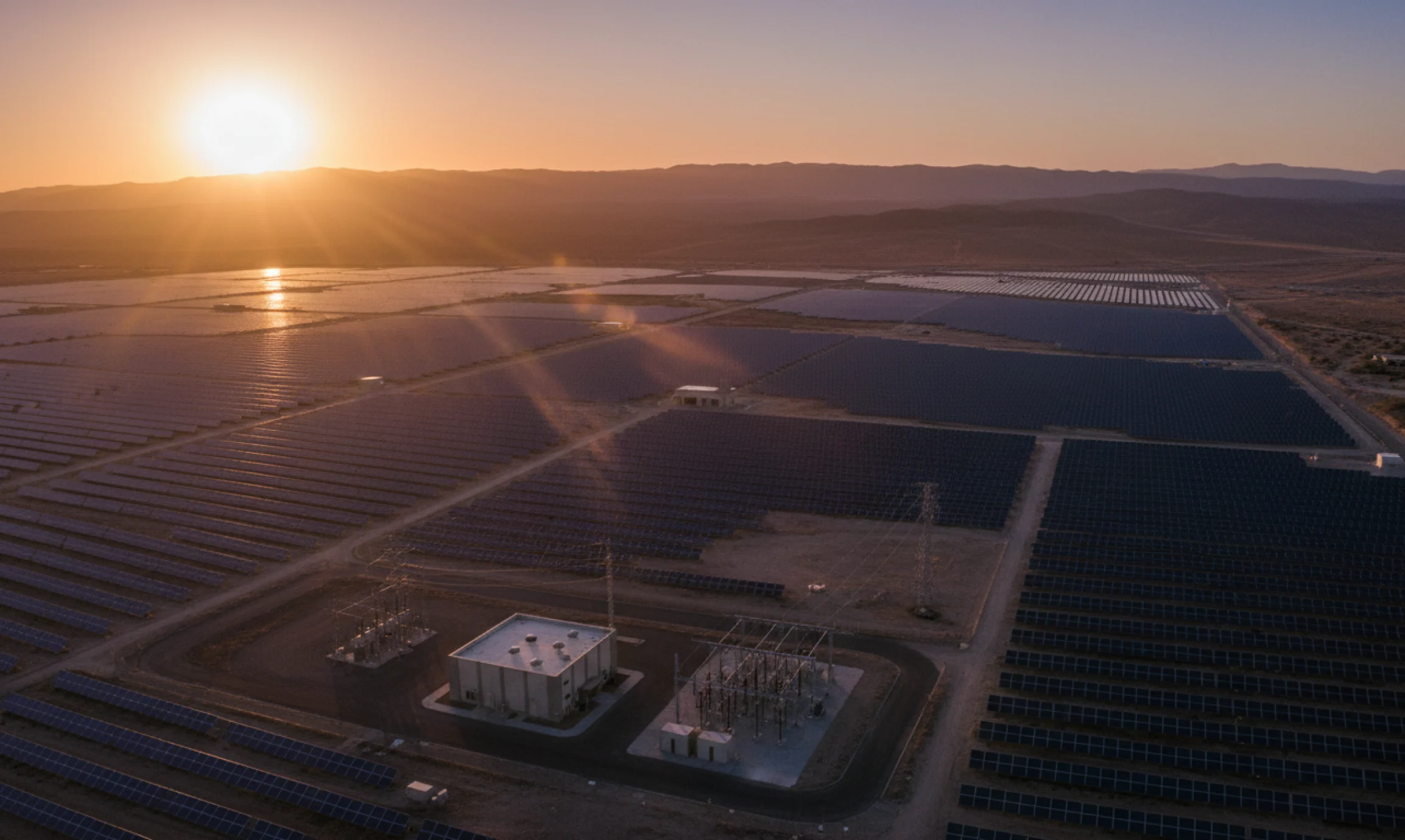
A utility-scale solar PV hub is a large generation site designed to supply electricity to the national grid or contracted buyers. In South Africa, utility-scale generation typically refers to installations larger than 50 MWₚ, primarily supplying the national grid. A hub is more than panels: its commercial structure connects the site, generation equipment, grid infrastructure and route to market.
Project scale is visible in South Africa’s private market. The available data records 37 NERSA-registered private utility-scale solar PV projects, with a combined capacity of 4,409 MW. These projects differ from embedded generation, which serves demand closer to its point of production. The distinction affects how a project connects, who buys its electricity and how transmission access shapes delivery.
Procurement provides another route to development. The REIPPPP procured 3,662 MW of solar PV capacity across bidding rounds, excluding RMIPPPP projects. For developers, procurement structures establish a framework for selecting projects and contracting generation. Private projects can instead be designed around buyers and wheeling arrangements, where network access allows electricity to reach a separate consumption site.
Build the project case for a utility hub around four elements: a developable site, a generation design, a viable grid connection and a defined buyer or procurement route. Each affects the others. The connection point can shape the site layout, for example, while buyer demand influences the commercial structure. A technically sound plant is not automatically a bankable hub.
For industrial facilities, the relevant question is how a hub’s generation fits energy demand and delivery arrangements. Solar PV utility hubs in South Africa can be structured for grid supply or contracted consumption, but scale alone does not settle the commercial case. Assess the project’s site, connection and revenue logic together. Explore solar utility hub development as a route to structuring a project around those requirements.
Greenovations Venture Studio: Drone-Powered Industrial Intelligence (GII)
Greenovations Venture Studio supports industrial teams assessing solar infrastructure and operational requirements. Its Solar PV Utility Hubs provide commercial and industrial energy off-takers with renewable energy under long-term Power Purchase Agreements (PPAs), with projects financed and maintained by Greenovations under multi-year contracts. The No-CAPEX model avoids upfront capital expenditure for partners. Its Drone-Powered Industrial Intelligence (GII) offering can also support decisions that require industrial intelligence.
These offerings serve different parts of an industrial project: GII provides industrial intelligence, while Solar PV Utility Hubs provide energy infrastructure. Consider them when planning needs to connect operational insight with a scalable solar deployment model, rather than treating generation assets as a standalone purchase.
If your commercial or industrial project is at the deployment-planning stage, contact Greenovations to discuss Solar PV Utility Hubs and the relevant next steps.
Turn site potential into an executable project
The next step is to turn a promising solar concept into a decision-ready development plan. For solar PV utility hubs in South Africa, align operational requirements, commercial structure and delivery risks before committing capital. Understanding these dependencies helps industrial teams distinguish a technically attractive proposal from one that fits their wider infrastructure priorities.
Greenovations’ offerings include Drone-Powered Industrial Intelligence (GII), an Electric Vehicle Ecosystem and Sustainable Seating Infrastructure-as-a-Service. Each addresses different infrastructure needs, helping organisations consider solar alongside wider operational requirements rather than evaluating every investment in isolation.
Define the project question first, then bring the relevant requirements into a focused discussion. Contact Greenovations Venture Studio to explore the next step for your infrastructure plans. A disciplined starting point gives the project team a stronger basis for action.
Frequently Asked Questions
How much utility-scale solar PV capacity is installed and planned in South Africa?
Utility-scale projects accounted for 51.92% of installed solar capacity in 2025, while installed solar capacity was projected to reach 14 GW by 2030. These measures describe different things: one is utility-scale’s share, the other a national capacity projection. For project planning, distinguish operating assets from proposed and under-construction capacity, which can change as grid access, procurement and project delivery progress.
Which companies develop and operate solar PV hubs in South Africa?
Greenovations provides Solar PV Utility Hubs for commercial and industrial energy off-takers. Under its model, projects are financed and maintained by Greenovations through multi-year contracts, and off-takers pay pre-agreed tariffs for the electricity they consume under long-term Power Purchase Agreements. Across the market, independent power producers and private project companies also develop and operate projects. Their roles vary by structure and may include securing land and financing or managing generation assets.
How much grid capacity is available for new solar projects in South Africa, by region?
Available connection capacity is determined at specific substations and network nodes, so a provincial total cannot establish whether a particular site can connect. Assess the proposed connection point, transmission constraints and planned generation against the network’s capacity to carry electricity. A site with strong solar resources may still face limited export capacity if its local grid infrastructure cannot accommodate additional generation.
What are the main challenges and timelines for developing a utility-scale solar PV project in South Africa?
Solar PV power plants typically have development lead times of between 6 and 12 months. Delivery depends on coordinating land access, environmental and technical assessment, financing, permits, grid connection and an electricity buyer. Grid constraints can affect both connection timing and expected generation revenue. Developers reduce execution risk by addressing these workstreams together, rather than advancing site selection before testing transmission access and the project’s route to market.
Where are South Africa's major solar PV hubs and projects located?
Major projects are distributed across South Africa, with a prominent concentration in the Northern Cape. Examples include Kalkbult in the Northern Cape and Touwsrivier in the Western Cape.
Visual summary
Planning a project like this?
Talk to the Greenovations venture desk about a No-CAPEX structure.