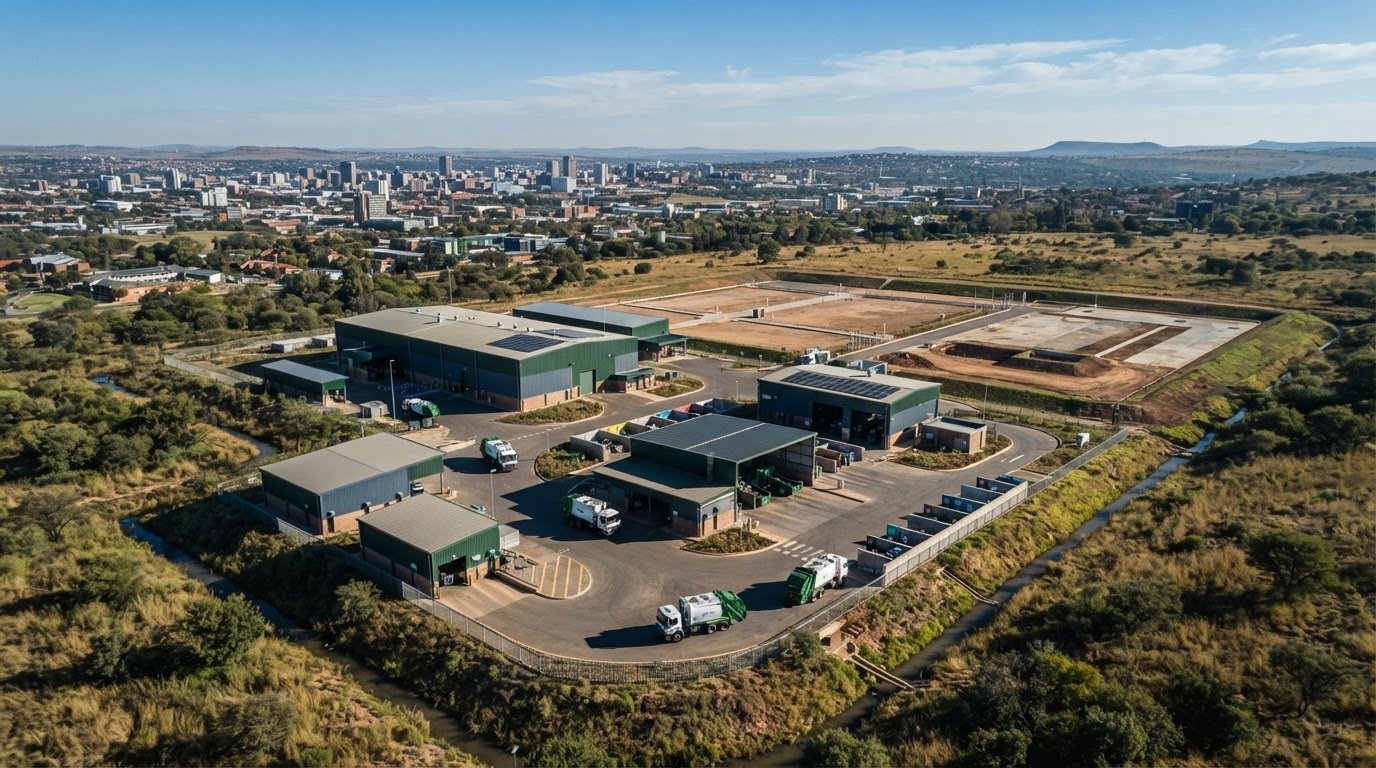
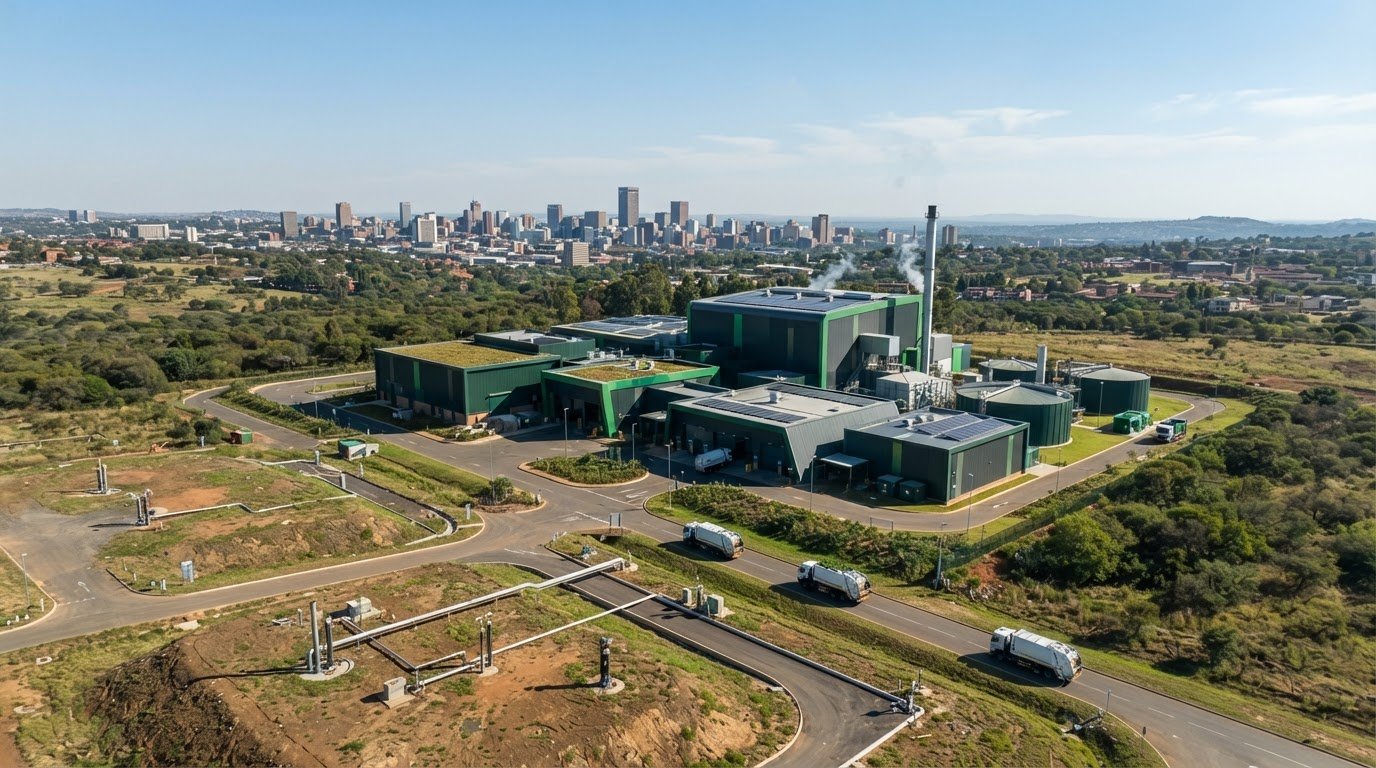
A waste-to-energy PPP in South Africa is a long-term delivery structure, not a funding shortcut: a private-sector partner designs, builds, finances, operates and maintains the facilities under a 25-year concession. In Johannesburg, ownership of the project’s facilities reverts to the City at the end of the concession.
For municipalities, the financing structure matters as much as the technology. Blended finance can help manage affordability, but affordable coal and low landfill taxes remain barriers to fully operational waste-to-energy processing in South Africa.
This article explains how blended finance can support municipal affordability, how waste-to-energy may extend landfill life and reduce methane emissions, and what a Johannesburg project is designed to achieve. It also examines the barriers that determine whether a PPP can progress from a proposed structure to an operating asset, and what other municipalities can learn from the model.
Key Takeaways
- Assess blended finance against the municipality’s long-term affordability and the project’s operating requirements, not capital needs alone.
- Evaluate how waste diversion and landfill-gas recovery could affect landfill capacity and methane emissions.
- Use Johannesburg’s project structure to identify which design and ownership principles may inform municipal planning elsewhere.
- Test the local economics carefully: affordable coal and low landfill tax can weaken the case for waste-to-energy development.
Blended finance and municipal affordability
Capital and operating costs, as well as electricity tariffs, depend on plant design, waste composition, processing needs and revenue structure. Municipal affordability therefore depends on how construction funding, operating obligations and energy revenues are allocated in the project contract.
In a South African public-private partnership, the private-sector partner designs, builds, finances, operates and maintains the facilities under a 25-year concession. The municipality’s role is defined through the project agreement, which sets out its obligations and the private partner’s performance requirements. This structure shifts delivery and lifecycle management into one contract; it does not remove the need for a viable revenue model.
Blended finance can combine public resources, development finance and private investment to address different project risks. Concessional or catalytic capital can improve the financing structure, whilst commercial funding supports construction and operation. The Infrastructure Fund was announced by President Ramaphosa in 2018. Its mandate was captured in a tripartite Memorandum of Agreement signed in August 2020. Those milestones establish an institutional financing framework, not an automatic funding allocation to every municipal project.
Municipal affordability depends on more than the upfront capital requirement. Decision-makers need to assess waste volumes, processing costs, electricity sales and how the contract allocates revenue risk. Without predictable feedstock or a viable route to market, a project may struggle to cover operating costs, even with blended funding.
Affordable coal and low landfill taxes create a direct commercial hurdle. When coal is an affordable energy source and landfill disposal carries a low tax burden, waste-to-energy must compete with both. This can weaken the business case for diverting waste and constrain private investment. Financing alone cannot close an underlying cost gap. Before procurement, municipalities should assess market conditions alongside the funding mix, contract term and operating model.
Costs vary by project, depending on plant design, waste composition, processing needs and revenue structure.
Landfill lifespan and methane emissions
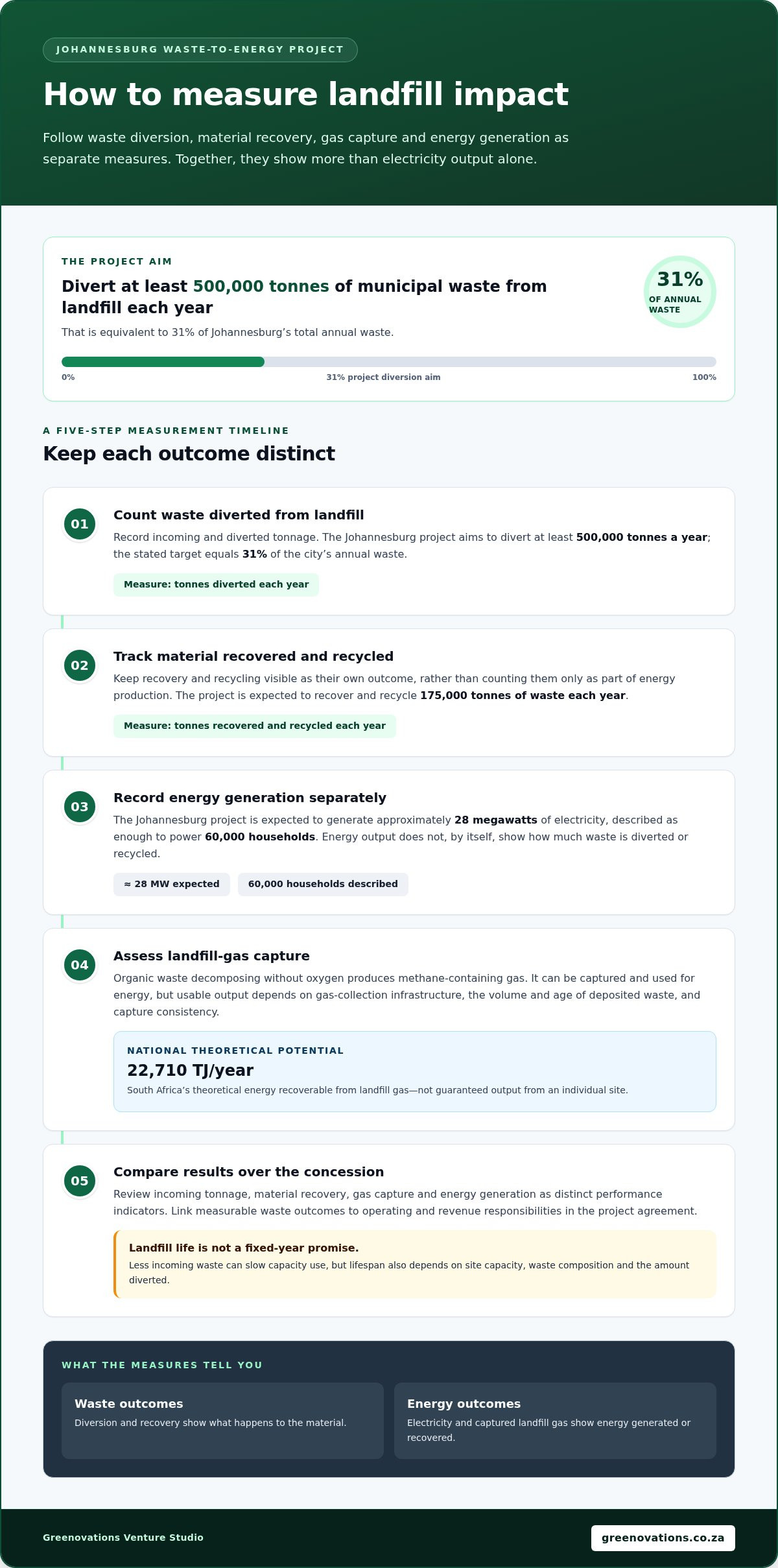
Diverting municipal waste can slow the rate at which landfill capacity is consumed. Johannesburg’s proposed waste-to-energy project aims to divert at least 500 000 tonnes of municipal solid waste from landfill sites each year, equivalent to 31 per cent of the city’s total annual waste. The operational effect is less incoming waste, not an automatic extension by a fixed number of years. Landfill lifespan also depends on site capacity, waste composition and how much material is diverted.
Landfill gas provides a separate energy pathway. As organic waste decomposes without oxygen, it produces methane-containing gas that can be captured and used for energy. South Africa’s theoretical energy recoverable from landfill gas is 22710 TJ/year. That figure describes national potential, not guaranteed output from a particular site. Gas collection infrastructure, the volume and age of deposited waste, and the consistency of capture affect usable energy.
A PPP can generate revenue from electricity sales, heat supplied to an off-taker, municipal waste fees and saleable by-products. The project agreement allocates these income streams and sets out how payments, operating costs and performance obligations fit together.
Johannesburg’s project is expected to recover and recycle 175 000 tonnes of waste each year, alongside generating approximately 28 megawatts of electricity. Its electricity output is described as enough to power 60 000 households. These targets show why material recovery and energy generation need separate operational measures: electricity output alone does not demonstrate how much waste avoids landfill or enters recycling streams.
Municipal planners can assess the landfill effect by tracking incoming tonnage, material recovery, gas capture and energy generation as distinct performance indicators. Comparing those measures over the concession period can show whether diversion is reducing pressure on existing landfill sites. For municipalities structuring waste management PPPs, the contract should connect measurable waste outcomes with operating and revenue responsibilities, rather than treating energy production as the sole measure of performance.
Potential model for other municipalities
Johannesburg offers a reference point, not a universal template. Its project aims to divert at least 500 000 tonnes of municipal solid waste from landfill sites each year and recover and recycle 175 000 tonnes annually. Other municipalities can use these targets to frame feasibility work, then adjust for local waste composition, collection systems and potential off-takers.
South Africa has the highest theoretical energy-from-waste potential in Africa, based on waste generated and collected. The theoretical energy recoverable from waste incineration is 104463 TJ/year. This national potential does not establish the commercial case for every municipality. Recycling keeps recoverable materials in circulation, whilst energy recovery can process residual waste. Landfill remains a disposal route, while solar and wind generate electricity without relying on waste feedstock.
The Johannesburg project is the named municipal waste-to-energy project in this case. Its expected electricity generation is approximately 28 megawatts, described as enough to power 60 000 households. These are project expectations, not evidence of an operating track record. The case therefore offers planning benchmarks, rather than operating performance data.
Municipalities considering a PPP can follow a disciplined sequence: characterise the waste stream, assess diversion and processing options, test energy and by-product markets, then allocate construction and operating risks through procurement. Each step informs the next. Feedstock quality influences technology selection; technology and site requirements shape capital needs; and revenue assumptions affect affordability and contract design.
A practical lesson from Johannesburg is to set separate, auditable targets for diversion, recycling and electricity production. Energy output alone cannot show whether landfill pressure is falling or recyclable materials are being recovered. Municipal teams should also map collection logistics and prospective buyers before finalising project requirements. This surfaces constraints early and gives bidders a clearer basis for financing and delivery proposals. The structure can be adapted to local conditions, but it must reflect each municipality’s waste stream, infrastructure and revenue pathways.
Barriers to waste-to-energy development
Technical potential alone does not make a project bankable in South Africa. Before procurement, each municipality must align feedstock, technology, revenue and infrastructure. Affordable coal and low landfill taxes can weaken the commercial case, reducing incentives to divert waste and compete with established energy sources. A local feasibility assessment is therefore central to project design. A waste to energy PPP South Africa project needs a revenue model that addresses these market pressures.
The governing framework covers municipal waste management, environmental assessment, PPP procurement, and electricity generation and supply. These areas affect site selection, approvals, tender documents and operating arrangements. Project teams should map applicable requirements early and assign responsibilities and approval milestones in the procurement plan. A waste to energy PPP South Africa proposal is stronger when these pathways are integrated rather than handled separately.
Grid connection and electricity offtake need project-specific planning. Connection feasibility depends on the site, network capacity and technical requirements. The generation configuration and sale arrangement determine the applicable electricity-sector permissions. Before tender, the municipality should establish the connection pathway, identify prospective off-takers and define how output, interruptions and payment responsibilities will be managed.
Operational inputs can undermine an otherwise sound design. Mixed waste affects processing performance, while inconsistent collection can disrupt feedstock supply. Site access, transport routes, land availability and residual disposal also affect continuity. Municipalities can reduce uncertainty by characterising the waste, mapping collection logistics and testing the proposed technology against the actual waste stream before setting project specifications.
Revenue risk needs equal scrutiny. Electricity sales alone may not support a facility if output lacks a credible buyer or the connection pathway remains unresolved. Waste fees, recyclable materials and usable by-products can contribute, but each needs clear contractual treatment. Municipalities should allocate construction, operating, feedstock and market risks to parties able to manage them, then set measurable performance requirements. For municipal teams developing infrastructure proposals, advance waste-management PPP planning with a defined feedstock, infrastructure and revenue case.
Greenovations Venture Studio: Drone-Powered Industrial Intelligence (GII)
Greenovations Venture Studio offers Drone-Powered Industrial Intelligence (GII) to support industrial infrastructure decisions. For municipalities advancing a waste-to-energy PPP, the practical next step is to define the information needed for planning, procurement and operational oversight, then identify where industrial intelligence can support that work.
GII is part of Greenovations Venture Studio’s wider portfolio, which also includes an Electric Vehicle Ecosystem, Sustainable Seating Infrastructure-as-a-Service and Solar PV Recycling. These are distinct solutions, not substitutes for a municipal waste-to-energy project. The appropriate choice depends on the infrastructure challenge.
Municipal teams can bring Greenovations Venture Studio into the conversation when assessing how industrial intelligence relates to their infrastructure requirements. Contact Greenovations Venture Studio to discuss the project context and potential next steps.
Move from feasibility to a defined project pathway
The next decision is whether the municipal case can be turned into a procurement-ready structure. For a waste-to-energy PPP in South Africa, this means clarifying the project objectives, delivery responsibilities and commercial assumptions before choosing a model. A disciplined brief gives municipal decision-makers and prospective partners a shared basis for evaluating the opportunity.
Greenovations Venture Studio offers Drone-Powered Industrial Intelligence (GII), an Electric Vehicle Ecosystem and Sustainable Seating Infrastructure-as-a-Service. These are distinct offerings within its wider infrastructure focus, not substitutes for project-specific waste and finance analysis.
Municipal teams developing an infrastructure proposition can contact Greenovations Venture Studio to discuss the opportunity and relevant next steps. A clear starting point is the municipality’s project objective and the decision it needs to make. Contact Greenovations Venture Studio to continue that discussion and move towards a more clearly defined project pathway.
Frequently Asked Questions
What technologies are used in South African waste-to-energy projects, such as landfill gas, incineration, and anaerobic digestion?
South African waste-to-energy projects may use landfill-gas capture, incineration or anaerobic digestion, depending on the waste stream and site. Landfill-gas systems collect methane produced as organic material decomposes. Incineration uses controlled combustion to recover energy from residual waste. Anaerobic digestion processes suitable organic waste without oxygen, producing biogas and digestate. Sorting and waste composition help determine which technology is technically suitable.
What are the main environmental, community, feedstock, and financial risks of waste-to-energy PPPs in South Africa?
Key risks include emissions and residue management, community concerns about facility impacts, and unreliable feedstock quantity or quality. Financial exposure can arise when operating requirements, waste fees and energy revenues do not align. For example, removing recyclable or organic material from the incoming stream can change the volume and composition available to the facility. Project planning should assess these factors together and assign clear monitoring and contractual responsibilities.
What waste-to-energy PPP projects exist in South Africa?
Johannesburg’s proposed waste-to-energy project is the municipal project described. It is expected to generate approximately 28 megawatts of electricity and recover and recycle 175 000 tonnes of waste each year.
Visual summary
Planning a project like this?
Talk to the Greenovations venture desk about a No-CAPEX structure.